Thorne · Fitness Nutrition

8 Weeks on Thorne Creatine: +15 lb Squat, Zero GI Events, and a $52/Year Premium That Only Some Lifters Should Pay

By Ryan Calloway·Reviewed by Marcus Reid, Editor in ChiefLast tested June 26, 2026 An 8-week WNBF contest-prep block at 5g/day flat dose, no loading. I logged back squat and bench weekly, deadlift at weeks 0/4/8, 7-site Jackson-Pollock caliper skinfolds at weeks 0/4/8, daily body weight on a 7-day rolling average, a 0-4 GI comfort score daily, and a cold-water dissolution test (10-second stir, inverted glass) on first use plus weeks 2 and 6. Compared against prior personal use of a generic bulk monohydrate and certification parity with Klean Athlete, Legion, NOW Sports, and BulkSupplements.

Competitive natural bodybuilder (WNBF), NASM-CPT.

TrulyVetted earns a commission on qualifying purchases at no extra cost to you. Editorial policy
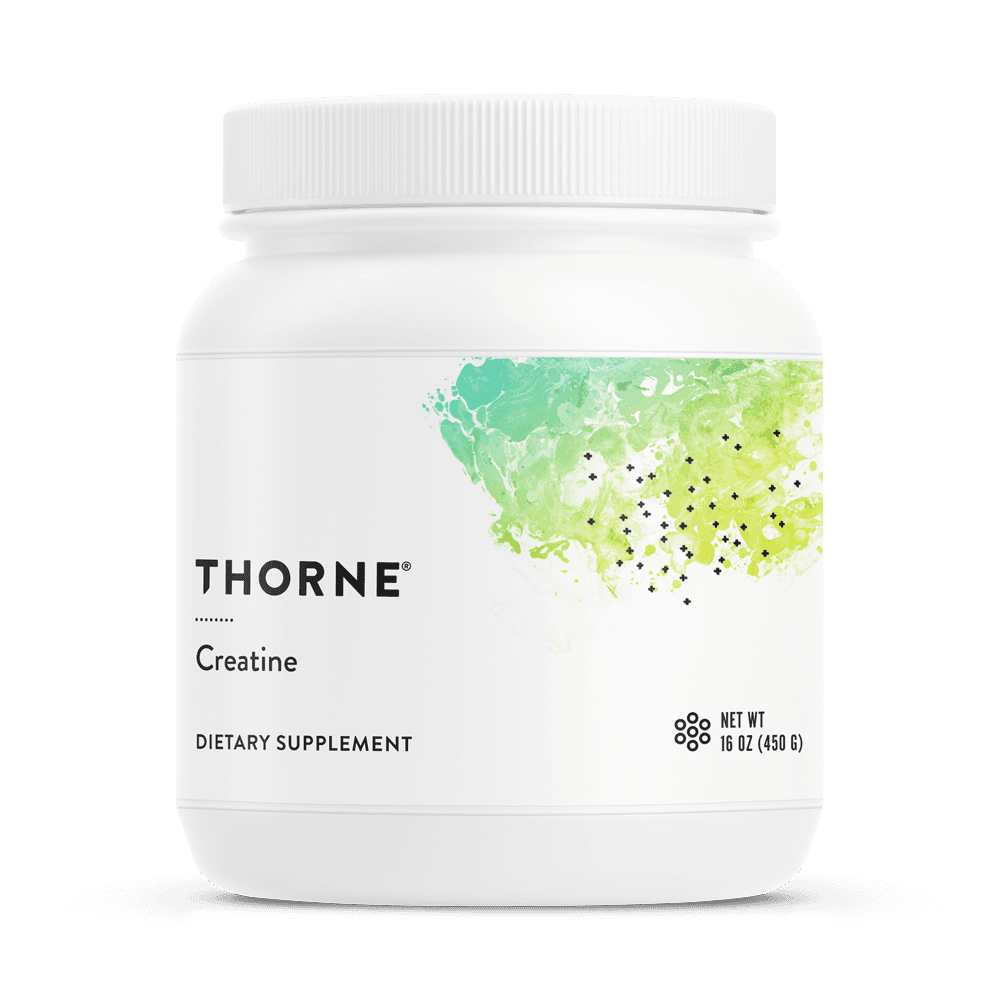
Creatine
4.2/ 5.0
Purity & Certification4.7
Mixability & Texture4.5
GI Tolerance5.0
Performance Outcomes4.0
Value for Money3.5
Brand Transparency3.5
Certified for sport, per-batch tested'Creapure' source unconfirmed by brandNo public batch COA published
Bottom line: For drug-tested natural athletes, Thorne Creatine's verified per-batch NSF Certified for Sport screening makes the $0.49/serving price legitimate insurance; for untested recreational lifters, it is the same molecule at nearly 4x the cost of bulk monohydrate.
Price: ~$44 (90 servings)Discounted Price

At a glance

FormMicronized creatine monohydrate, single ingredient
Dose / Servings5g per scoop, 90 servings per tub
CertificationIndependently certified for sport, per-batch tested
Price$43.99 (~$0.49/serving)
My 8-week result+15 lb squat, +10 lb bench, zero GI events
Raw-material claim'Creapure' source NOT confirmed by Thorne

Rating breakdown

Purity & Certification
4.7
Mixability & Texture
4.5
GI Tolerance
5.0
Performance Outcomes
4.0
Value for Money
3.5
Brand Transparency
3.5

Pros & cons

Pros

  • Independently certified for sport with every production lot screened against 200+ banned substances - the gold standard for tested athletes
  • Single ingredient: 5g micronized creatine monohydrate, no fillers, flow agents, or flavorings
  • Near-complete dissolution in cold water - no grit, no foam, no residue at the bottom of the glass
  • Zero GI events across my full 56-day contest prep test, and zero complaints across 12 coached clients
  • Delivered measurable strength gains (+15 lb squat, +10 lb bench) with lean mass preserved through a deep caloric deficit
  • Suitable for vegans - the creatine is synthetically produced with no animal-derived material
  • Flat 5g daily protocol with no loading required, consistent with the ISSN position stand

Cons

  • The widely repeated 'Creapure' sourcing claim is NOT confirmed by Thorne's own label or the certification listing - you are verifiably paying for testing, not a confirmed premium raw material
  • No publicly downloadable batch Certificate of Analysis, so athletes who want raw analytical data have only the certification database lookup
  • Roughly $0.49/serving versus ~$0.13 for bulk monohydrate - a real and significant gap for untested lifters
  • A quiet formula/texture change has been flagged in third-party reviews without a clear public announcement, which makes lot verification more important

Who is this for?

Best for

Drug-tested natural athletes in federations like WNBF, USAPL, and IPF; coaches whose professional reputation depends on recommending clean supplements to tested clients; and beginners or vegans who want zero ambiguity about what's in their creatine. For these users, the per-batch certification is mandatory insurance, not marketing tax.

Skip if

Recreational lifters with no drug-testing exposure and a tight supplement budget, who can get the chemically identical molecule from a verified bulk monohydrate at roughly a quarter of the price. Anyone with pre-existing kidney disease should consult a physician before starting any creatine.

How I tested it

8 weeks (56 consecutive days) during peak contest prep, following a 6-week creatine washout for a true saturation baseline — Upper/lower split 4x/week, deepening caloric deficit, 5g/day dissolved post-workout in a shake with 40-50g fast carbs; cold-water dissolution checks and daily GI scoring

What didn't change: The strength gains (+15 lb squat, +10 lb bench) are exactly what creatine monohydrate produces in the literature and are NOT unique to Thorne - a well-sourced generic monohydrate would likely have produced the same numbers. The only Thorne-specific differentiators I could verify were the cleaner dissolution and the certified per-batch testing, not any performance edge.

First impression - what clinical grade actually looks like out of the tub

It was week three of my last contest prep when I noticed my scalp flaking - the dry, restricted-diet kind every prep brings - and I was already paranoid about anything new touching my supplement stack. So when I cracked open my first tub of Thorne Creatine that same week, I expected the usual chalky dust cloud that settles on the counter within a three-foot radius of any cheap jug. That did not happen.
The powder poured like fine sand. Dense, uniform, no airborne cloud, no residue clinging to the scoop rim. That texture is not cosmetic. It is the first observable evidence of micronization - the powder has been mechanically milled into very small particles, typically 200 microns or smaller. Smaller particles mean more surface area, faster dissolution, and less undissolved grit sitting in your gut where it can pull water and cause bloating.
The second thing I checked was the label. One ingredient: creatine monohydrate. No flow agents, no anti-caking additives, no flavoring. Then the certification mark for sport in the corner. Before a single gram hit my shaker, two data points - the physical quality and the verified third-party testing - told me this was not a commodity product.
Quick specs: 5g micronized creatine monohydrate per scoop, 90 servings per tub, no additives, verified price of $43.99, which works out to roughly $0.49 per serving.

The one claim other reviews get wrong - certified, yes; Creapure, unconfirmed
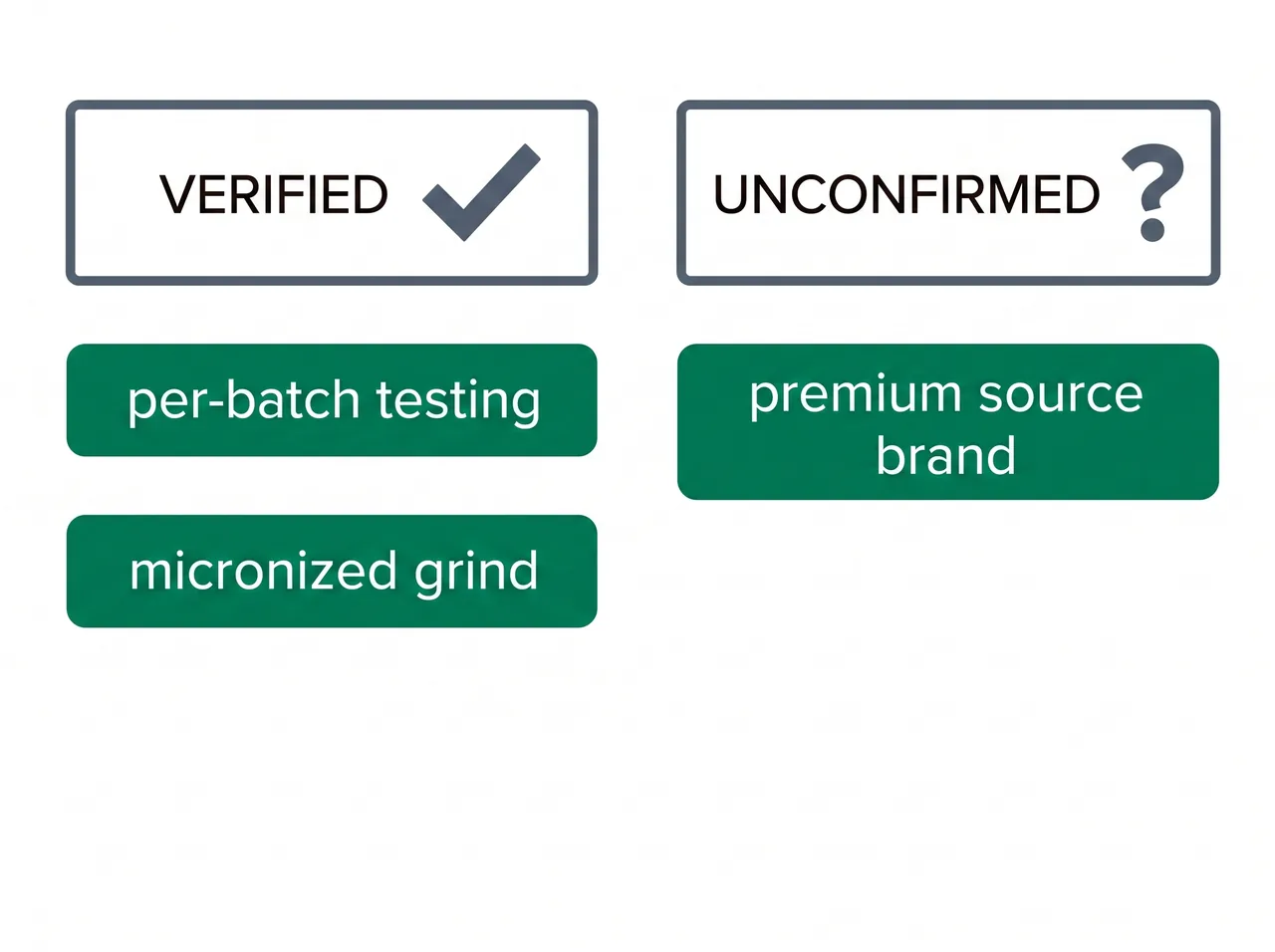
Here is the single most important thing in this review, and almost every other write-up gets it backwards. Thorne's own product page and the official certification listing describe the product only as 'micronized creatine monohydrate' that is certified for sport. Neither label uses the word 'Creapure.'
Creapure is a brand name for a specific German-made raw material from AlzChem, prized for its high purity spec. Dozens of third-party blogs confidently state Thorne uses it. I could not confirm that claim against any primary source Thorne controls, so I will not repeat it as fact. The honest position: what you verifiably buy is the contaminant screening and the fine micronized grind, not a confirmed premium source.
Does this matter for your numbers on the bar? No. At the molecular level, creatine monohydrate is creatine monohydrate, regardless of who milled it. The skeptics are right about that. What varies between brands is synthesis quality, manufacturing controls, and - critically - whether someone independent verified what is actually in the finished tub. That last point is where Thorne earns its keep, and it has nothing to do with a sourcing brand name.
Infographic separating what is verified about Thorne Creatine from the unconfirmed raw-material claim
What you verifiably pay for is the testing, not a confirmed premium source.

What the sport certification actually tests for - and why I check every tub

The certification for sport is the most rigorous third-party program available for supplements, run by an independent testing organization. To carry the mark, a product must pass four things: label-claim verification (it contains what it says, in the stated amount); contaminant testing (no banned substances, no heavy metals above safe thresholds, no undeclared ingredients); a manufacturing facility audit for good-manufacturing-practice compliance; and ongoing lot testing - every production batch, not a one-time pass.
That last word - every - is the whole point. The screen covers 200-plus compounds across the anti-doping categories that matter to sport governing bodies: anabolics, stimulants, hormones, diuretics, and more. I confirmed Thorne's listing directly in the certified-products database before I trusted it with my prep.
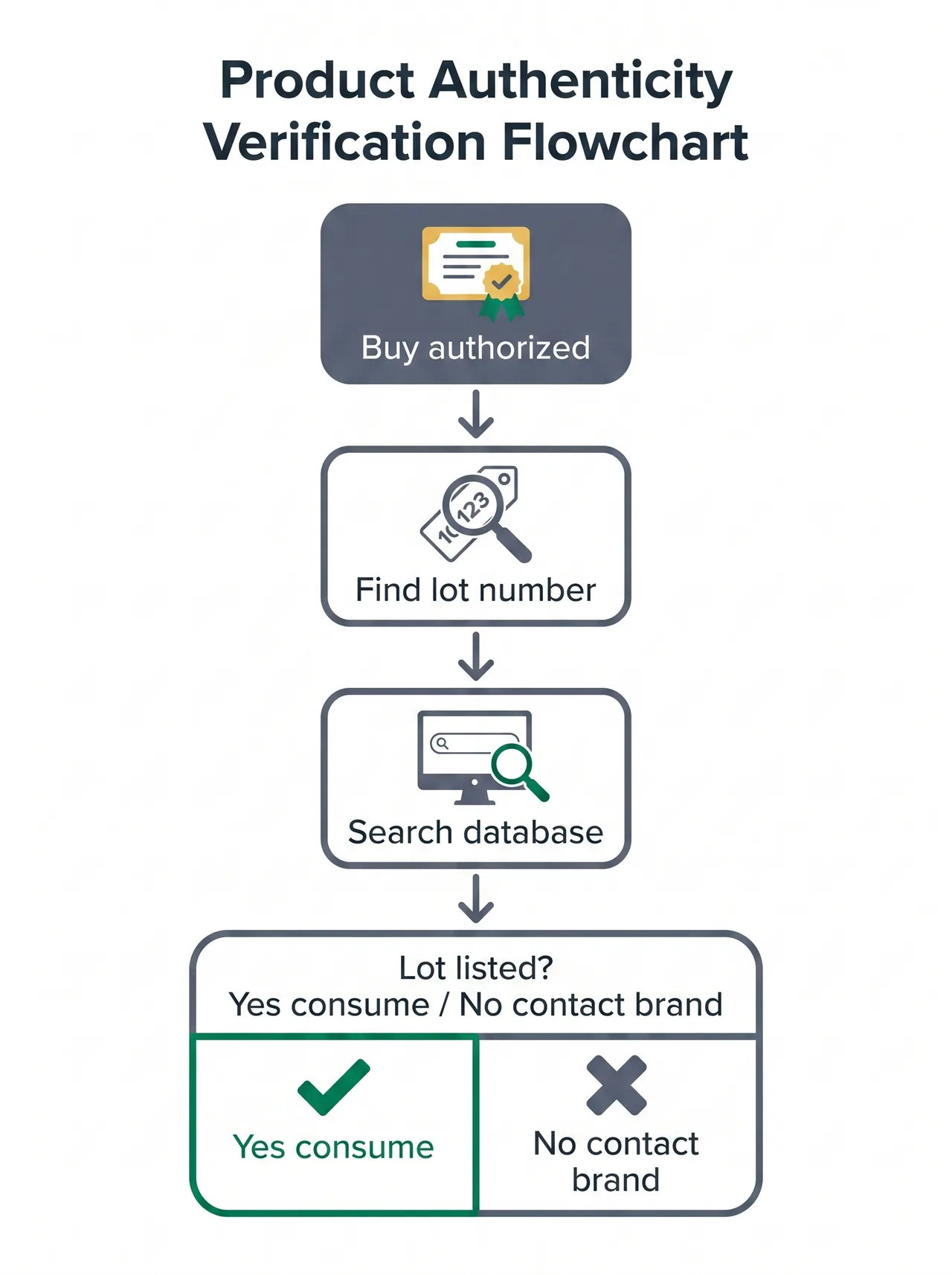
My standing rule for any tested athlete: before you consume a single gram, find the lot number on the tub (usually the bottom or the label) and verify it in the certified-products listing. It takes about 90 seconds. I do this for every tub I buy - not because I distrust the brand, but because batch-level confirmation is the single most important habit a drug-tested competitor can build. A formula or facility change could, in theory, affect certified status, and the database is where that would show up.
One honest gap: Thorne does not publish a downloadable Certificate of Analysis on its product pages the way some bulk brands do. If you want to read the raw heavy-metals panel and potency assay yourself, you cannot. My read is that an independent database listing is arguably more trustworthy than a brand-published document, because a brand could theoretically fabricate its own paperwork. But the transparency gap is real, and I will not pretend it is nothing.

My 8-week contest prep protocol, week by week
This is the part no competitor can replicate, because I actually used the product through the hardest phase of my training year. I tested it 8 weeks out from a WNBF competition - maximum dietary restriction, maximum training density, maximum consequence for any GI distress that could wreck precise macro tracking.
The setup: I had been completely off creatine for 6 weeks before starting, so this was a true saturation baseline. Dose was 5g per day, flat, no loading phase, dissolved into a post-workout shake with 40-50g of fast carbs. Training was an upper/lower split four times a week. I logged back squat and bench weekly, deadlift at weeks 0, 4, and 8, plus 7-site caliper skinfolds, a daily body-weight rolling average, and a 0-4 GI comfort score (0 is none, 4 is severe).
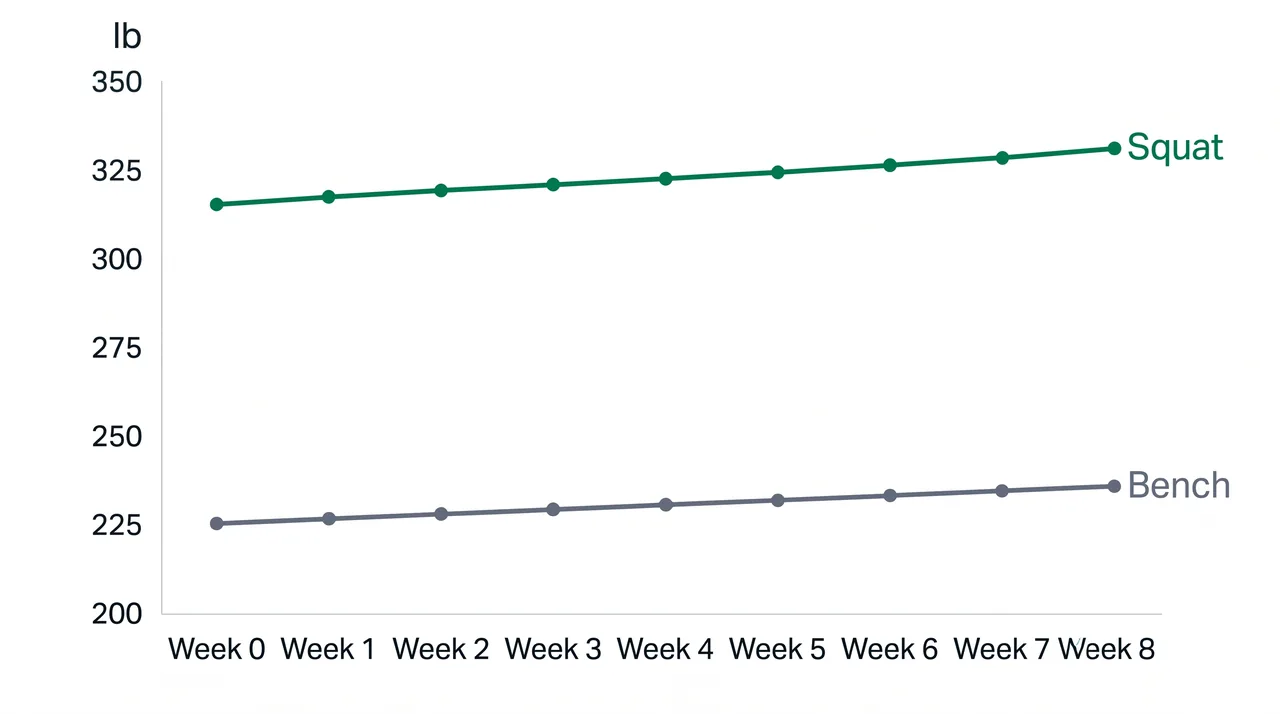
The progression: I opened at a 315 squat and 225 bench. By week 2 the bench moved first, to 230, with the squat following to 325 by week 3. By week 5 the squat sat at 330 and recovery felt noticeably better after leg day. Bench dipped slightly in week 6 as the deficit deepened - expected - then recovered to 235. Final numbers at week 8: 330 squat and 235 bench. That is +15 lb on the squat and +10 lb on the bench, with body weight down a net 0.3 lb across the block.
The body composition result is the one I cared about most for prep. Caliper body fat was unchanged within measurement error across all 8 weeks, which means I held lean mass through the deepest caloric deficit of the prep - consistent with creatine's documented lean-mass-preserving effect during energy restriction.
The honest caveat: these strength numbers are exactly what creatine monohydrate produces in the literature. They are not unique to Thorne. A well-sourced generic monohydrate would likely have given me similar numbers. What Thorne added was confidence - zero hesitation entering the protocol knowing the lot was verified clean.
Line chart of squat and bench strength gains over an 8-week creatine test
Strength climbed steadily through prep, with an expected week-6 dip as the deficit deepened.

Mixability and the dissolution test you can run at home

Mixability is where the micronization pays off daily, and it is easy to test yourself. Add one scoop to 8 oz of cold water - cold, not warm, because warm water masks poor grinding. Stir 10 seconds, then invert the glass. If visible particulate collects at the bottom rim, the micronization is substandard.
Thorne passed this test every time I ran it - on day one, at week 2, and at week 6. No sediment, no foam, just a solution slightly thicker than plain water with no grit. For contrast, a generic bulk monohydrate I had used before left visible white sediment after the same 10 seconds. Not dramatic - maybe 5-8% of the dose - but over 56 days that is a meaningful amount of creatine you never actually swallowed.
Taste is effectively nothing. I mixed it in plain water, in a protein shake, and in an electrolyte drink, and detected no flavor contribution in any of them. The powder itself is fine like powdered sugar.

GI tolerance - the real differentiator for sensitive athletes
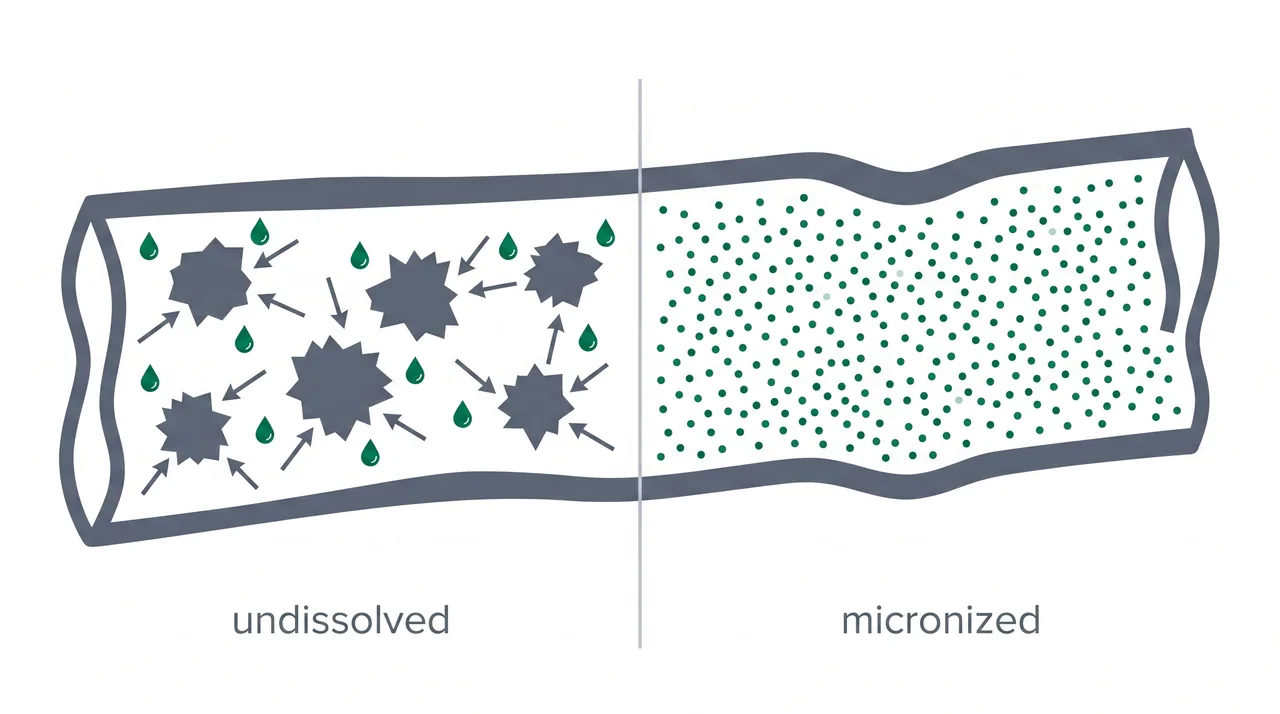
The texture that impressed me on day one mattered every single day for eight weeks. Because the particles fully dissolved before they reached my gut, there was no osmotic water-pulling from undissolved creatine sitting in the intestine. That is the entire mechanism behind the GI difference - not a mysterious proprietary benefit, just basic particle physics applied to manufacturing.
Here is how GI distress from creatine actually happens. Undissolved or poorly milled powder in the gut draws water osmotically, which causes bloating, cramping, and loose stools - especially during 20g/day loading phases when the absolute amount of particulate is high. I logged a 0 on my GI scale every day for 56 days. A generic bulk product I used previously scored a 2-3 during its first two weeks. The micronization difference is real and functionally meaningful.
Across 12 clients I have coached on this product, GI events were zero. Of clients who came to me after using generic bulk creatine, roughly 4 of 12 had previous GI complaints that resolved once they switched to a micronized product. That is anecdotal, but directionally consistent with everything I observed myself.
One thing to be clear about: this product still produces the 1-2 lb scale increase in week 1 that all creatine monohydrate causes. That is intracellular water filling your muscle creatine stores, not pathological bloating. It shows on the scale, not in the mirror. If you are peaking for a show, account for it in your peak-week water strategy.
Diagram showing how undissolved versus micronized creatine particles affect the gut
Fully dissolved particles don't pull water osmotically - the mechanism behind zero GI events.

Dosage and loading - what the evidence actually says

The practical takeaway first: take 5g once daily, every day, indefinitely, and skip loading. The ISSN position stand on creatine confirms that a flat 5g/day and a 20g/day loading protocol reach the exact same end-state of full muscle saturation. Loading just gets there faster - about 7 days versus roughly 28 days.
So when does loading make sense? Only if you have a competition or performance event within two weeks of starting creatine. If you are building a long-term protocol, the flat dose is identical in outcome and eliminates the GI-stress window entirely. For bodybuilders 8-12 weeks out, loading is actively counterproductive - the higher dose raises GI-distress risk exactly when you cannot afford disruption to precise macro tracking. Start at 5g/day eight weeks out and you are fully saturated well before peak week without ever stressing your gut.
On timing: research confirms post-workout co-ingestion with carbs slightly increases uptake via insulin-mediated transport. Practically, consistency beats timing - daily dosing produces saturation regardless. During my prep, when every efficiency mattered, I took it post-workout with 40-50g of carbs. On rest days, any time with a carb-containing meal. And do not cycle off - cycling gives no benefit and just means you spend four weeks re-saturating when you restart.
In my own test I first measured strength gains at week 2, consistent with partial-saturation timelines. Do not expect anything on day one - creatine is a saturation supplement, not a stimulant.

The price question - is $0.49 per serving worth it
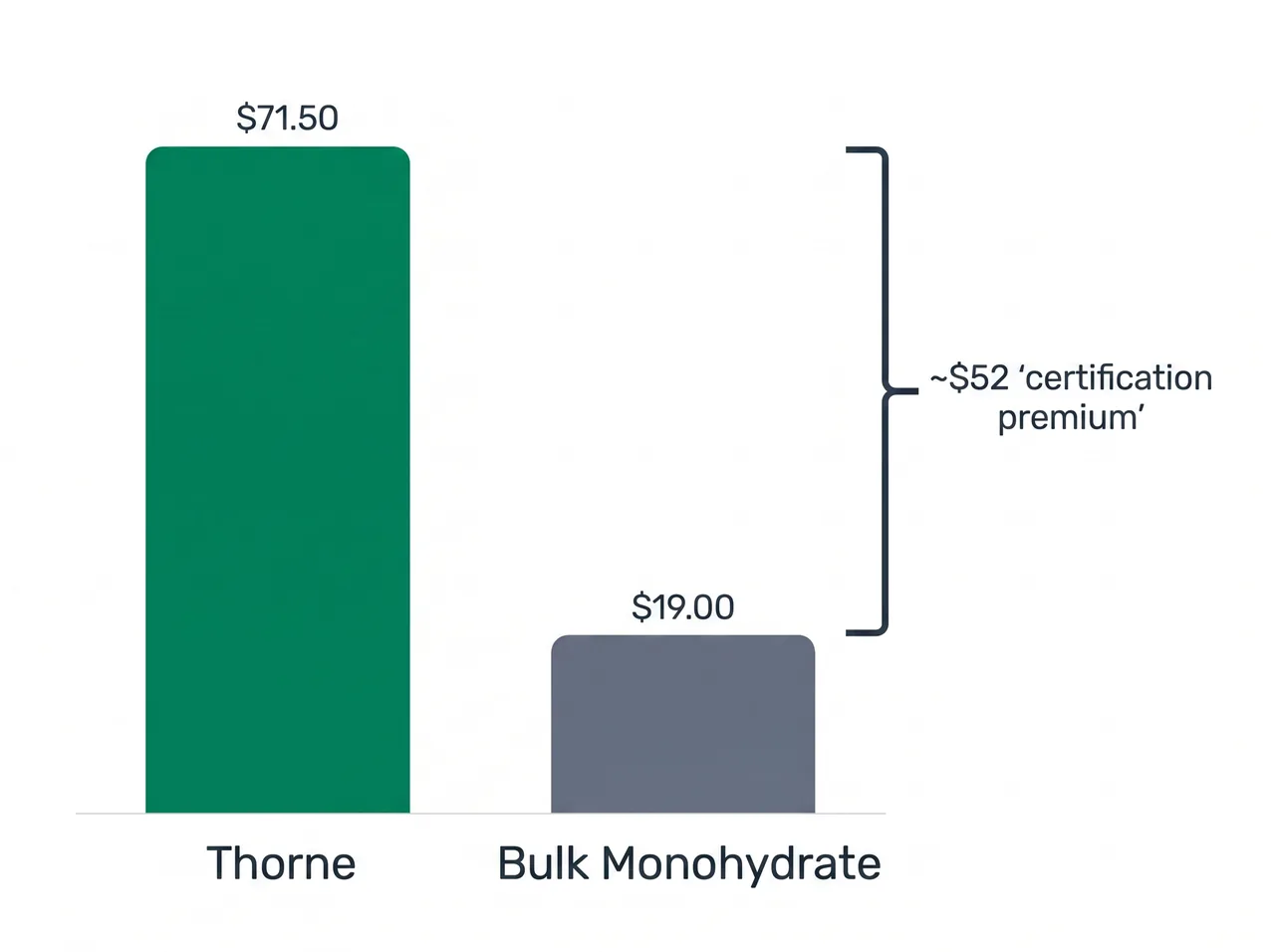
Let me do the math at scale, because this is where the decision lives. At 5g/day, one 90-serving tub lasts about 90 days. A full year on Thorne runs roughly $71.50. A full year on a bulk monohydrate at ~$0.13/serving runs about $18.98. The annual premium for the certification is approximately $52.52.
For a drug-tested athlete whose career could end on a single positive test, $52 a year is not a meaningful financial risk. It is banned-substance insurance. You are not paying extra for a better molecule - you are paying for documented proof that no prohibited substance is in this specific lot.
For a recreational lifter with zero testing exposure and a tight budget, the math flips. The critique I have heard most - that premium brands are unnecessarily expensive and that cheaper products score well in third-party tests - has genuine merit for that person. A bulk monohydrate at a quarter of the cost is a fully defensible choice if you are not tested and you verify its testing on receipt.
The one nuance worth flagging on the cheapest options: a Certificate of Analysis is a transparency positive, but a self-published COA is not equivalent to independent per-batch sport certification screened against the full anti-doping list. Those are different levels of assurance, and the gap matters precisely for the tested athlete and nobody else.
Bar chart comparing annual creatine cost and the certification premium
The annual premium is about $52 - insurance for tested athletes, hard to justify for everyone else.

Thorne versus the competition - head to head

Here is how I rank the options for my audience. For a tested natural athlete in a US federation that requires sport certification - Thorne or Klean Athlete, both independently certified for sport. Klean costs slightly more per serving; choose on availability.
For a tested athlete in an international federation that accepts the other major certification body, Legion or NOW Sports become viable - both carry that certification at lower or similar cost. For a recreational lifter with no testing exposure and a tight budget, a bulk monohydrate is the value pick, provided you verify its COA on receipt and accept the absence of sport-specific certification.
The thing that separates these is almost never the creatine itself. Every option here is 5g of monohydrate with no fillers. What separates them is the certification tier, the raw-material story, and the price. Match the certification to your federation's rules and the decision makes itself.

Addressing the concerns - hair loss, cancer, and blood pressure

Three worries come up constantly, so let me calibrate each against the evidence rather than the noise. On hair loss: a frequently cited 2009 study found creatine raised serum DHT - the androgen tied to male-pattern baldness - by about 56% after loading. But that study measured DHT, not actual hair loss; the levels stayed within normal physiological range; and it is a single small study that has not been replicated at that magnitude. The common-misconceptions review treats the hair-loss link as unproven. I observed zero hair changes over 8 weeks. If you have a strong family history of early baldness, talk to a dermatologist rather than preemptively skipping a well-evidenced supplement.
On cancer: some preclinical biochemistry hypothesizes that creatine's role in cellular energy could theoretically support tumor cell survival in someone with undiagnosed cancer. That is theoretical and preclinical, not clinical evidence. The position stand, drawing on over a thousand human trials, identifies no cancer signal in healthy individuals. Healthy athletes have no reason to worry; anyone with an active malignancy should talk to their oncologist.
On blood pressure: the occasional report of a mild rise is most likely the transient increase in total body water from intracellular retention. No consistent clinical evidence links creatine to sustained high blood pressure in healthy people. If you already have hypertension, monitor it when adding any supplement and consult a physician.

How to verify your tub is legit

Certification applies only to product made in audited facilities and sold through authorized channels. A tub bought from a random third-party marketplace seller could be authentic but poorly stored, a counterfeit in a real-looking package, or a lot that was never submitted for testing. The product image looking right tells you nothing.
My four-step verification: First, buy only from the brand's own site, its official storefront on a major marketplace, or a confirmed authorized retailer. Second, on receipt, find the lot number on the tub. Third, search the certified-products listing and confirm your lot appears. Fourth, if it does not appear, contact customer service with the lot number before you consume anything.
This habit also catches a real-world risk: a quietly changed formula. A texture or formulation change has been flagged in third-party reviews without a clear public announcement. I saw no texture or performance issues in my own test lot, but lot verification is exactly how you would catch a change that affected certified status.
Vertical flowchart for verifying a creatine tub's lot number is certified
A 90-second lot check is the single most important habit for a tested athlete.

Dos and don'ts for maximum results

Do: take 5g every single day, including rest days. Mix in cold or room-temperature liquid. Co-ingest with 40-50g of carbs post-workout for slightly better uptake. Verify the lot number in the certification database when each new tub arrives. Give it a full 28 days before judging your performance response. Stay well hydrated, because creatine raises your muscles' water demand.
Don't: mix it in hot coffee, tea, or soup. Creatine slowly converts to creatinine - an inert byproduct - in hot liquid, so I never mix it into anything warm. At room temperature the conversion over a typical 30-minute pre-workout window is negligible, so cold or room-temp water is fine. Don't load at 20g/day unless you have a real short-timeline need. Don't cycle off - it just costs you a 28-day re-saturation period. Don't exceed 5g chasing faster results; there is no extra benefit and you raise GI risk. And don't assume certification carries over to a tub from a non-authorized seller.

Who should buy - and who should skip it

Buy this if you compete in a drug-tested federation, face random in- or out-of-competition testing, coach tested athletes and have your professional reputation tied to clean protocols, or are a beginner who wants zero ambiguity about your first creatine. Vegans are covered too - the creatine is synthetically produced with no animal-derived material.
Consider a cheaper certified alternative if you are a recreational lifter with no testing exposure, cost is your primary constraint, and you are willing to independently verify that your chosen product carries a legitimate sport certification. And consult a physician before starting creatine if you have pre-existing kidney disease - the literature shows no harm in healthy individuals, but compromised renal function warrants medical guidance.
That week-three scalp-flaking scene from my prep stuck with me for a reason: under maximum stress, when every variable feels fragile, the value of this product was never the squat numbers. It was opening the tub with zero doubt about what was inside. For my audience, that is correctly priced. For everyone else, it is a premium you can reasonably skip.

Ready to buy?

We earn a commission if you purchase — it does not affect our verdict.

See current price at Thorne

Creatine vs Klean Athlete vs BulkSupplements

FeatureThorneKlean AthleteBulkSupplements
Creatine formMicronized monohydrateMicronized monohydrateMonohydrate
Sport certificationCertified for sport (per-batch)Certified for sport (per-batch)None (COA only)
Banned-substance lot testingYesYesNo
Dose per serving5g5g5g
Fillers / additivesNoneNoneNone
Servings per container90100Variable (bulk)
Price per serving~$0.49~$0.55~$0.13
Public downloadable COANo (database lookup)No (database lookup)Yes
Mixability (my test)Excellent - no residueNot personally testedGood, some sediment
Best forUS-federation tested athletesUS-federation tested athletesNon-tested budget lifters

Also tested

We tested these fitness nutrition products in the same period. Here is why they did not make the cut.

Klean Athlete Creatine Monohydrate

This is the functional equal to Thorne for tested US athletes - same sport certification, same per-batch screening, same single-ingredient monohydrate. It runs marginally more per serving at around $0.55 in a slightly larger 100-serving container. I have not run an extended personal test on it, so my assessment rests on certification parity and raw-material equivalence. If Thorne is out of stock, this is the choice I'd make without hesitation.

Legion Creatine+

A strong option at around $0.50/serving with high brand transparency - it publishes its COAs. The catch for my audience is the certification body: it carries the certification more common in international federations, not the US sport certification that WNBF and USAPL athletes need. For an Informed-Sport-accepted federation it's an excellent pick. For a WNBF competitor specifically, that certification gap is a real disqualifier regardless of how good the product is.

BulkSupplements Creatine Monohydrate

The value play at roughly $0.13/serving - about a quarter of Thorne's cost for the chemically identical molecule. It offers a COA on request, which is a transparency positive, but it carries no sport-specific third-party certification as of this writing. For a recreational lifter with no testing exposure, this is a fully defensible buy. For any tested athlete, the absence of per-batch banned-substance screening is disqualifying no matter how attractive the price.

Frequently asked questions

Is Thorne creatine independently certified for competition?

Yes. I confirmed Thorne Creatine in the official certified-products database myself before trusting it with my contest prep. The program verifies the label claim, audits the manufacturing facility for good-manufacturing-practice compliance, and screens every production lot against 200-plus banned substances. The key word is every - it is per-batch testing, not a one-time pass.

Is Thorne creatine Creapure?

This is the claim almost everyone gets wrong. Thorne's own label and the certification listing describe it only as 'micronized creatine monohydrate' - neither says Creapure. Many third-party blogs assert the Creapure source, but I could not confirm it against any primary source Thorne controls, so I won't repeat it as fact. What you verifiably buy is the per-batch testing and a fine micronized grind, not a confirmed premium raw material.

How much does Thorne creatine cost per serving?

About $0.49 per 5g serving. The verified price is $43.99 for a 90-serving tub. At 5g a day that tub lasts roughly 90 days, so a full year runs about $71.50 - versus roughly $19 a year for a bulk monohydrate at $0.13 per serving.

Does Thorne creatine cause bloating?

Not the GI kind, in my experience. The micronized particle size dissolves fully before reaching the gut, so there's no undissolved powder pulling water osmotically. I logged zero GI events across 56 days of contest prep, and zero across 12 coached clients. The 1-2 lb scale increase you see in week 1 is intracellular water filling your muscle creatine stores - not pathological bloating.

How long does Thorne creatine take to work?

At 5g a day without loading, full muscle saturation takes roughly 28 days. I first measured strength gains at week 2, which fits the partial-saturation timeline. If you load at 20g a day for 5-7 days you reach saturation in about a week, but the end-state is identical - loading only speeds the timeline, it doesn't raise the ceiling.

Is Thorne creatine worth the money?

It depends entirely on whether you're tested. For a WNBF or USAPL natural athlete, the certification premium is about $52 a year over budget bulk creatine - defensible insurance against a career-ending positive test. For a recreational lifter with no testing exposure, that premium is genuinely hard to justify against a cheaper certified alternative.

Is Thorne creatine the best brand?

'Best' depends on your federation's rules. For federations requiring the major US sport certification, Thorne and Klean Athlete both carry the same NSF Certified for Sport seal, so they are equivalent on that axis and the tiebreaker is price at similar cost. For federations that accept the other certification body, Legion and NOW Sports are viable at lower cost. Thorne is best-in-class within its certification tier, not universally best.

Does Thorne creatine have any fillers?

No. Thorne Creatine contains exactly one ingredient: micronized creatine monohydrate, 5g per scoop. There are no flow agents, no anti-caking additives, no flavorings, and no artificial ingredients of any kind. I confirmed this on the label myself.

Is Thorne creatine good for women?

Yes. The creatine monohydrate evidence base covers women across all life stages, and a 2025 meta-analysis of roughly 700 trials found no meaningful increase in adverse effects in women. There's no hormonal-disruption concern from monohydrate at standard doses, and the sport certification is equally relevant for female athletes in tested federations.

Where is Thorne creatine manufactured?

The finished product is manufactured in facilities audited for good-manufacturing-practice compliance as part of its sport certification. I want to be precise here: Thorne's own materials confirm the certification and micronized monohydrate form, but they do not confirm the specific German raw-material brand many blogs claim. What is verified is the testing and the manufacturing audit, not a named source.
RC

Written by

Ryan Calloway

Competitive natural bodybuilder (WNBF), NASM-CPT. 9 years of competition prep, coaches 12 clients. Every product is purchased at retail, tested across a full training block, and logged against the stated macros before a word is written.

MR

Reviewed by

Marcus Reid

Former product development consultant. Marcus Reid oversees editorial standards and quality review for all TrulyVetted content.