ARMRA · Fitness Nutrition

8 Weeks on ARMRA Colostrum: 0.5" Less Bloating, Fewer Sick Days, and Zero Disclosed IgG

By Ryan Calloway·Reviewed by Marcus Reid, Editor in ChiefLast tested June 29, 2026

An 8-week self-administered trial during a 12-week bodybuilding prep block, tracking one variable at a time: waist measurement as a bloating proxy, training sessions missed to illness, perceived recovery and DOMS days, and nail and hair changes. Baseline taken in weeks 1-2. Compared on the disclosure axis and price against WONDERCOW, Ancestral Supplements, and Honor Supplements. Sensory dry-scoop test for clump, grit, and sweetness on the unflavored powder.

Competitive natural bodybuilder (WNBF), NASM-CPT.

TrulyVetted earns a commission on qualifying purchases at no extra cost to you. Editorial policy
Colostrum

Reader Deal — 15% off at ARMRA

Use code LINASAOUMAA at checkout

See current price at ARMRA
3.3/ 5.0
Clinical Evidence Match (dose vs studied protocol)2.8
Label Transparency / IgG Disclosure2.0
Sourcing & Processing Quality4.3
Real-World Results (8-week trial)3.6
Value / Cost-Per-Serving3.2
Customer Experience & Trust2.8
Per-serving IgG not disclosedNo independent potency assay shownGrass-fed US sourcing (brand claim)
Bottom line: ARMRA is a well-sourced, pleasant colostrum with real-but-modest immune benefits, but it refuses to publish a per-serving IgG figure - the one number that lets you check the dose - hedging behind a marketing percentage instead.
Price: ~$120 (bulk jar) / $84 subscriptionDiscounted Price

At a glance

Per-serving IgG disclosedNo (only >40% marketing claim)
Price$119.99 jar / $83.99 subscription
Per-serving cost~$0.87-$1.67
Best-supported benefitFewer upper respiratory infections
FormatPowder, dry-scoop or cool liquid
Dairy-freeNo - bovine milk-derived

Rating breakdown

Clinical Evidence Match (dose vs studied protocol)
2.8
Label Transparency / IgG Disclosure
2.0
Sourcing & Processing Quality
4.3
Real-World Results (8-week trial)
3.6
Value / Cost-Per-Serving
3.2
Customer Experience & Trust
2.8

Pros & cons

Pros

  • Genuinely strong sourcing: grass-fed, pasture-raised US family-farm cows, first-milking, upcycled surplus
  • Cold-chain low-temperature processing is the gentlest method for keeping immunoglobulins and growth factors intact
  • Clean, malty milk-powder taste that dry-scoops well with no clumps or grit in the unflavored version
  • Best-supported benefit (fewer upper respiratory infections) is backed by real clinical evidence at moderate doses
  • In my own 8-week log I measured a 0.5-inch waist drop from reduced bloating and visibly stronger nails
  • Easy to dose and stack: works fasted in the morning or post-workout with L-glutamine and probiotics
  • Lists the immunoglobulin types (IgA, IgG, IgM) plus a 400-plus bioactive profile, so you know the category of compounds you get

Cons

  • No per-serving IgG amount is ever published, so you cannot match the dose to any study protocol
  • The likely 1 to 2 gram serving sits far below the 20 to 25 gram doses used in the strongest studies
  • Gut and leaky-gut marketing outruns the science, which is genuinely conflicting and slow at best
  • Documented customer-service problems: no phone line, unanswered emails, and canceled orders
  • It is bovine milk-derived, not dairy-free, and carries a real allergy risk for sensitive users

Who is this for?

Best for

Athletes and active people (25-55) with mild gut or immune goals who train hard, value premium grass-fed sourcing and a clean taste, and can afford a $120 jar without chasing the highest studied doses. It fits someone who wants fewer sick days during heavy training blocks and is comfortable treating the gut and hair claims as a measured experiment.

Skip if

Skip it if you are cost-sensitive or you require a verifiable per-serving IgG number to match a study protocol. Also skip it if you are dairy-sensitive, or you prefer capsules over powder.

How I tested it

8 weeks (within a 12-week prep block) — Fasted-morning dry-scoop dosing per brand method, ramped from a quarter teaspoon; consistent sleep, macros, and training load logged alongside; unflavored powder.

What didn't change: Recovery and DOMS improvement was marginal and unclear - I could not separate it from sleep and load management, and I measured no change in hair density.

6:30 AM, Week 8 of Prep - What a Dry Scoop of ARMRA Actually Told Me

It is 6:30 AM and I am eight weeks into a twelve-week prep block, standing in my kitchen, post-fast, with a scoop of ARMRA Colostrum on my tongue. The powder is off-white and smells faintly like milk powder. I dry-scoop it - the brand's own recommended method - and it dissolves clean and malty, no clumps, no grit. I have been logging every variable for this trial: sleep, macros, training load, and now colostrum. This is the scene I kept coming back to.
Here is my thesis up front, so you can decide if the rest is worth your time. This is not a feature list. It is an eight-week measured trial, a clinical cross-check against the real literature, and a head-to-head cost analysis against cheaper rivals. I bought the jar at retail and tracked outcomes one variable at a time.
And here is the tension that shapes the whole review: the premium product will not tell you how much IgG you are actually getting. A cheaper competitor will. When the expensive option is the less transparent one, that is the story.
So what does ARMRA colostrum do? It is bovine first-milking colostrum - the first milk a cow produces after calving - that supplies immunoglobulins (immune antibodies) plus a large profile of other bioactive compounds. The brand markets it for gut health, immunity, recovery, and hair and nails. The honest version: the immune side has real support, and the rest is a mix of modest and unproven.

What ARMRA Colostrum Is - and What Is Actually on the Label
Colostrum is the first milk a mammal produces right after birth. In cows, it is rich in immune antibodies (IgA, IgG, IgM), lactoferrin (an iron-binding protein with antibacterial properties), and growth factors. Those antibodies and lactoferrin are the headline reason people take it, and there is a solid review of how these bioactives behave in trained people that frames the effects as real but modest.
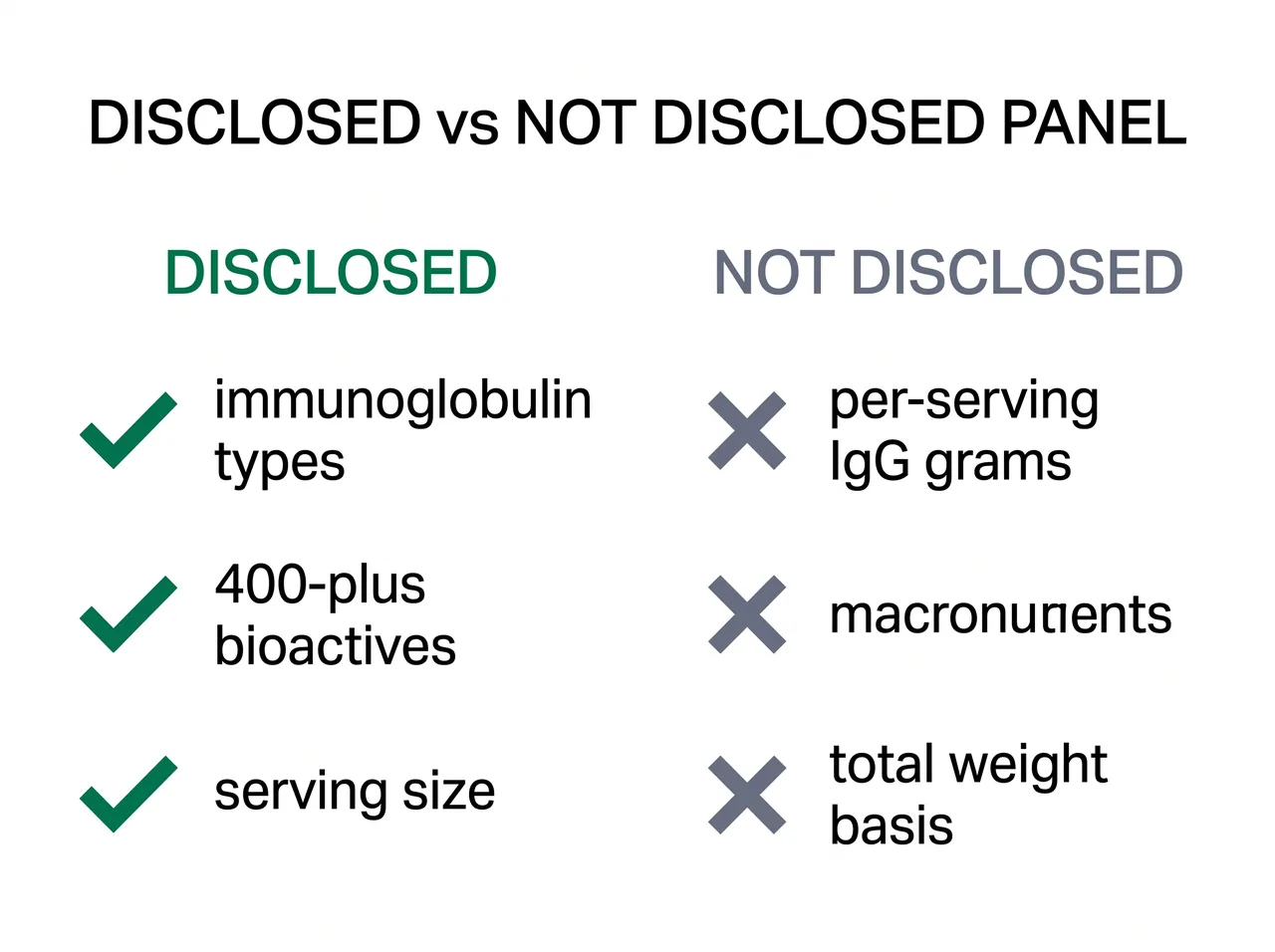
Now the label. ARMRA lists 'Immunoglobulins (IgA, IgG, IgM)' and '400+ bioactive nutrients.' Its marketing claims an IgG concentration above 40 percent. When I dug further, support staff put the floor at 'no less than 35 percent.' What you will not find anywhere is a per-serving IgG figure in grams. The serving size is roughly 1 gram from the jar.
That is unusual. The label also shows no macronutrients, which is strange for a milk-derived powder. Both of those choices point the same direction: a proprietary blend that hides the amounts of the very compounds you are paying for.
Every credible reviewer I studied hit the same wall I did. You cannot find the number. A concentration percentage with no total weight is not a dose - it is a ratio with no denominator. That distinction is the entire review in one sentence.
Two-column infographic comparing what ARMRA's label discloses versus what it hides
What the ARMRA label tells you - and the one number it never does.

The IgG Transparency Problem - The Heart of This Review
Before I buy any supplement, I check whether the dose matches the study protocol. That is the core of my job as a coach. With ARMRA, I simply cannot, because no per-serving IgG number exists to check. That is an automatic deduction, not a nitpick.
Here is how to run the same audit yourself - call it the Label-Disclosure check. Read the supplement facts panel. If a colostrum prints a flat IgG percentage on-label, you can multiply it against the serving weight and get a real gram figure. If it hides behind 'proprietary blend' and a marketing percentage with no serving weight, you cannot. ARMRA fails this completely; as I am about to show, the rest of the premium category only half-passes.
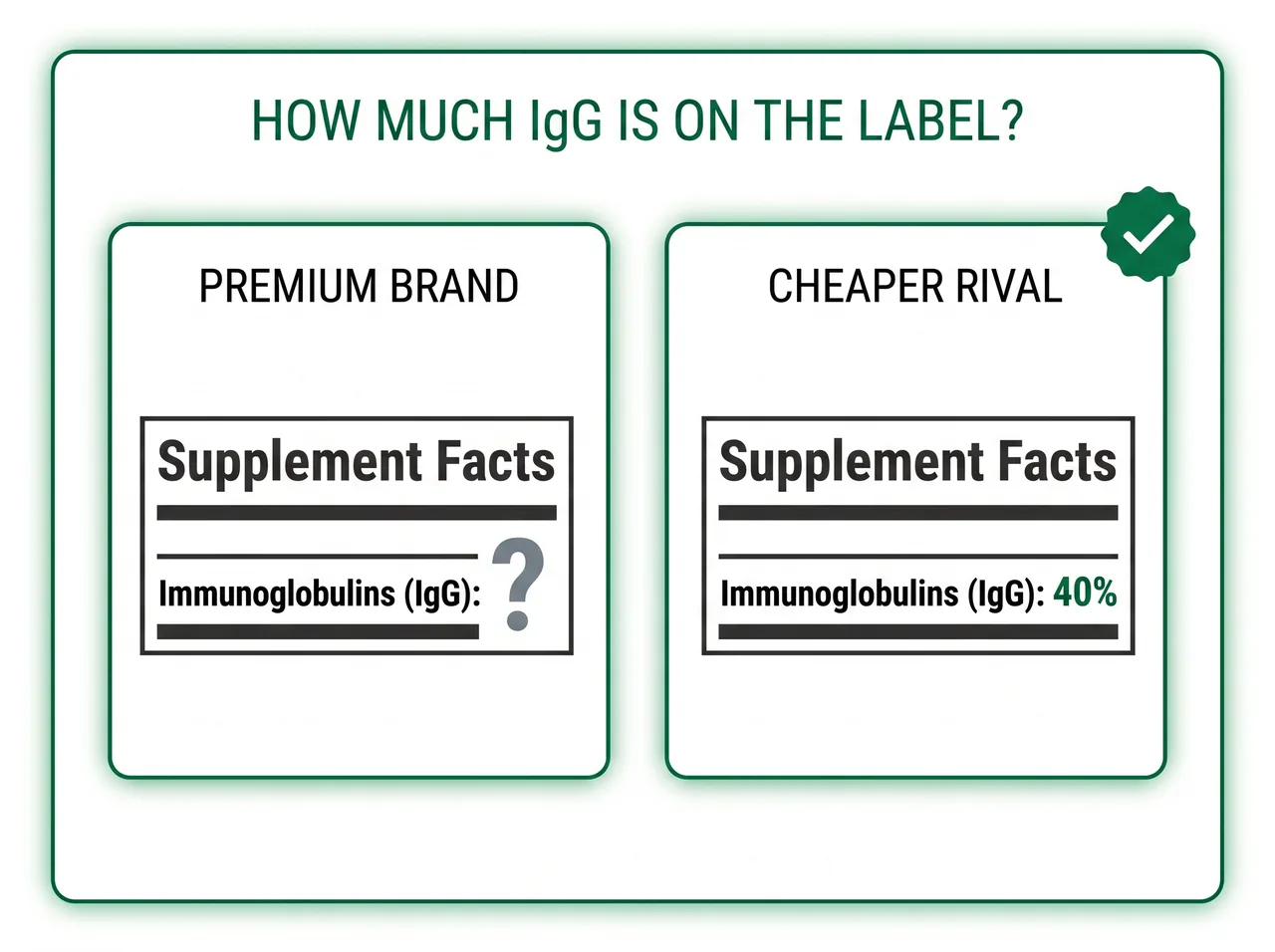
Take WONDERCOW, the brand most often held up as the transparent alternative. It states a 40 percent IgG concentration in its product listing - more than ARMRA will commit to - at roughly $1.08 per serving, or $0.92 on subscription, which is comparable to ARMRA, not dramatically cheaper. But here is the uncomfortable truth I found when I actually read the labels: WONDERCOW does not publish a per-serving IgG figure in grams either, and that 40 percent lives in its marketing, not on its supplement-facts panel. So the honest finding is bigger than one brand. The entire premium category hides the per-serving gram amount you would need to match a study dose. ARMRA is simply the most evasive of the bunch, because it will not even commit to a single concentration number; its own support hedged from 'over 40 percent' down to 'no less than 35 percent.'
I want to be fair about the science of dosing, too. Clinicians who reviewed the category point out that the strongest studies used 20 to 25 grams of hyperimmune colostrum daily, or about 5 grams of a serum-derived concentrate. A regular colostrum supplement delivering 1 to 2 grams is a fraction of that. So even the brands that name a percentage may be underdosed against the best protocols. The difference is that with a brand that at least names a number, you have something to how far short you are. With ARMRA, you are guessing.
So is ARMRA better than other colostrum brands? On sourcing and taste, arguably yes. On the thing that determines whether the dose can work - disclosure - it is the worst of the premium options I compared.
Two supplement labels: a premium brand showing no IgG number versus a rival that states a 40 percent concentration
The premium brand will not even name a number; a rival at least states a percentage - though neither prints the per-serving grams.

My 8-Week Clinical Progression Log, Week by Week
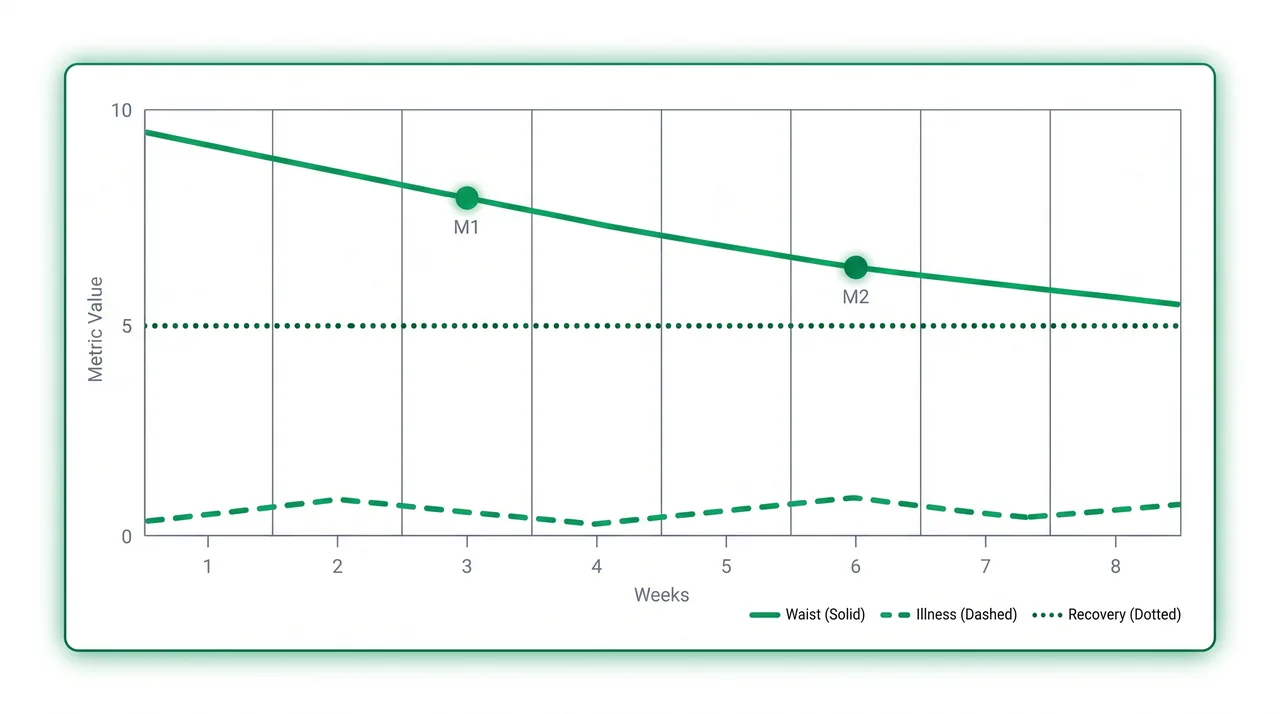
That same dry scoop, eight weeks later. My training log shows fewer sessions missed to illness. My waist measurement is down half an inch - not from fat loss, but from reduced bloating. My nails are visibly stronger. The data is in, and it is real but modest.
Weeks 1 to 2 were adaptation. I started low, took my baseline measurements, and logged mild gas in the first few days. Nothing dramatic, and it faded. This is the same first-week GI grumble I see come up again and again, and ramping the dose slowly is the fix.
Weeks 3 to 4 brought the first subtle change: my waist measurement, which I use as a bloating proxy, trended down slightly. No recovery change yet. I logged it carefully because subtle is exactly the kind of result that fools you if you are not measuring.
Weeks 5 to 6 were the interesting stretch. I pushed into a heavy training block - the part of prep where I usually catch something - and stayed healthy. Fewer sniffles than my prior blocks. That tracks with the trial showing moderate-dose colostrum cut upper respiratory infection incidence and duration, which is the single best-supported colostrum benefit.
Weeks 7 to 8: the nail strength was obvious, the bloating reduction held, and recovery improvement stayed marginal and honestly unclear. I could not separate it from sleep and load management.
Now the counterweight, because results here are genuinely polarized. Equally credible long-term testers ran 60 days and saw nothing - no change to hair, skin, energy, mood, or recovery. One ran five months with no benefit and a family member who developed a full-body rash. My experience landed in the middle: real but modest, which is exactly where the honest reviewers cluster. The reason gut results lag and are not guaranteed is that the permeability evidence is conflicting, which I cover next.
On hair growth specifically: I noticed stronger nails, not measurably more hair, and there is no solid human evidence colostrum grows hair. Treat any 'thicker hair' claim as anecdote, including the enthusiastic ones.
Line chart of 8-week results showing waist down, fewer sick days, flat recovery
My measured 8-week trial: bloating eased, sick days dropped, recovery stayed flat.

Does It Actually Work for Gut Health? The Conflicting Evidence

Let me be plain. The immune benefit is the best-supported claim. The gut and leaky-gut story is not settled - it is conflicting.
ARMRA's marketing says it 'addresses all four layers of the gut barrier' and cites an in-house figure of 86 percent less bloating over 12 weeks. That company study was unpublished, had no control group or placebo, and relied on self-reported surveys. A percentage with no control group is a press release, not evidence.
Worse for the tidy 'seals your gut' narrative: a study of colostrum during running training actually found intestinal permeability went up, not down. That cuts directly against the marketing. It does not prove colostrum harms your gut; it proves the picture is messier than the ad copy admits.
So can it help with leaky gut or bloating? Maybe, slowly, and the evidence cuts both ways. Some long-term testers swear their bloating vanished; others said gut issues got worse. Both are real outcomes. If brain fog, food sensitivities, and post-meal bloating are your problem, treat colostrum as an experiment with a measurable endpoint - not a cure.

Sourcing and Processing - Where ARMRA Genuinely Earns Its Premium
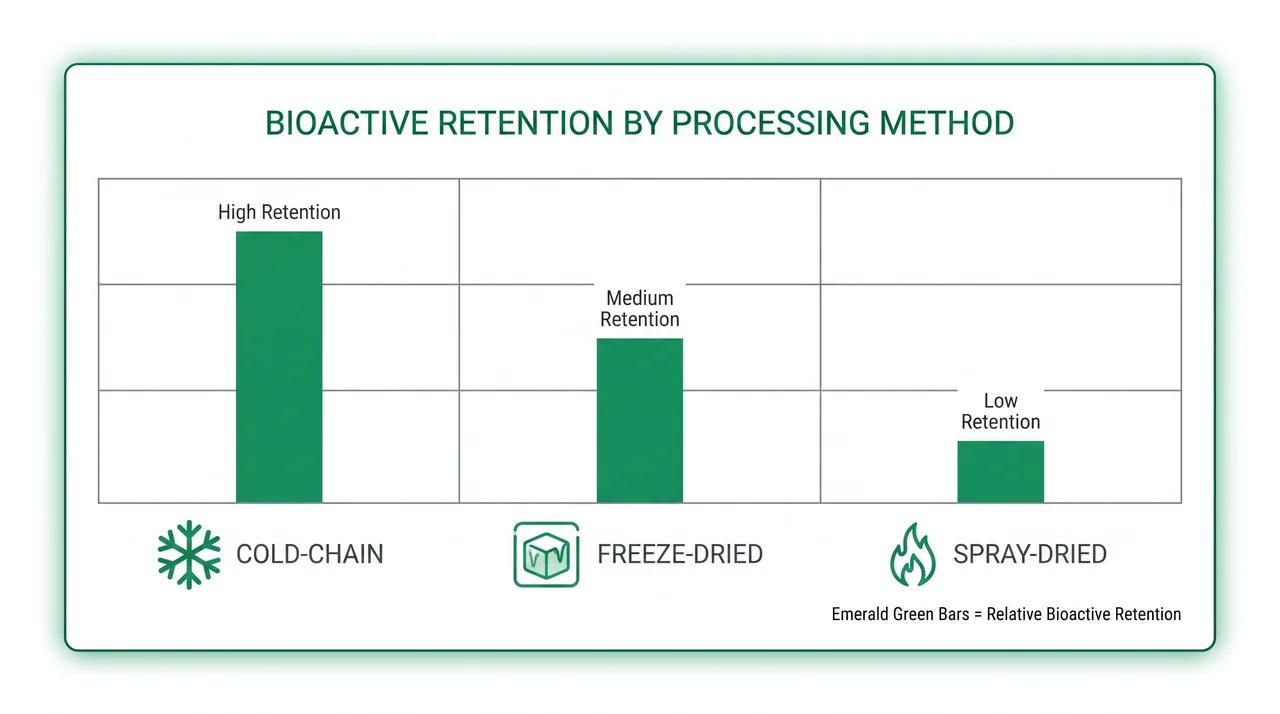
This is where even skeptics give ARMRA credit, and I will too. The sourcing is grass-fed, pasture-raised US family-farm milk, first-milking, and upcycled from surplus the calves do not need. That is a genuinely thoughtful supply chain.
Processing matters because heat destroys the fragile antibodies and growth factors that make colostrum worth taking. There are three common methods. Cold-chain or low-temperature processing keeps the most bioactives intact. Freeze-drying is gentle and good. Spray-drying uses higher heat and is the cheapest, with more potential degradation. ARMRA markets a cold-chain method, which is the right call for retention.
Here is the honest caveat, and it loops back to the central problem. Colostrum composition varies widely by animal, breed, and collection time, and it is not standardized across supplements. Excellent sourcing improves the raw material; it does not tell you the finished per-serving potency. Sourcing quality and disclosed potency are two different things, and ARMRA nails the first while dodging the second.
Diagram comparing bioactive retention across cold-chain, freeze-dried, and spray-dried processing
How processing method affects how much of the active colostrum survives.

How to Take ARMRA for Maximum Effect

Take it one of two ways: dry-scoop it onto your tongue, the brand's method, or mix it into a cool liquid. Never use hot liquid - heat degrades the bioactives and makes it clump. Start small, around a quarter teaspoon, and ramp up over the first week to ease the gas most people get early on.
Run the Dry-Scoop Sensory test on the unflavored version, ideally fasted in the morning. Good colostrum dissolves clean and malty with no grit. If a flavored version tastes oversweetened, that is usually cheap stevia masking the product, and I would skip it. Buy unflavored.
On timing and intent: fasted morning suits gut and immune goals, since you are not competing with food. Post-workout suits recovery stacking - I pair it with L-glutamine and a probiotic. How much per day? Follow the label, roughly 1 to 2 grams or 1 to 2 scoops, after ramping from a quarter teaspoon.
Can you take it on an empty stomach? Yes, and many people prefer it. But know this: colostrum technically breaks a fast. It contains protein, calories, and bioactive compounds, so if you are strict about a fasting window, take it inside your eating window.

Cost-Per-Serving - Is It Worth the Money?

Price is the number one complaint I hear about ARMRA, full stop. A jar runs $119.99, or $83.99 on subscription. Depending on jar size and how many scoops you use, that works out to roughly $0.87 to $1.67 per serving. If you try to chase the doses used in the strongest studies, the math gets brutal - testers have cited around $5 a day and roughly $660 a month to get there.
Compare that to WONDERCOW at about $1.08 per serving, or $0.92 on subscription - comparable to ARMRA, not a clear saving. WONDERCOW at least names a 40 percent IgG concentration in its listing, though it too stops short of a per-serving gram figure. On the budget end, the community-named pick is Honor Supplements at around $65 for 60 servings. I am not putting an invented per-serving IgG figure on any of these brands - that would be exactly the guessing game I am criticizing.
So is ARMRA worth the money? For an athlete with mild gut or immune goals who values sourcing and taste, it is a defensible splurge. For anyone cost-sensitive or who wants verifiable potency, a disclosed-IgG alternative is the smarter buy. This is the same lesson I keep landing on with premium supplements - much like the gap I found in the certified creatine gummies that cost 5x the identical powder, you are often paying for format and brand, not a measurably better dose.

Customer Service and Buying Experience - The Hidden Risk

The product reviews are mixed; the service reviews are alarming. There is a real divergence between platforms. The thin Amazon listing skews positive across a handful of ratings, while the independent review side is dominated by one-star complaints, the bulk of them about service.
The specifics matter if you are about to spend over $100. The pattern: no phone number to call, emails and chat going unanswered, and orders canceled without explanation. In one case a buyer lost over $100 with no resolution. There is also a recurring 'the advertising oversells it' theme.
None of that changes whether the powder works in your body. But it does change the risk of the transaction. Protect a $120 purchase: buy through a channel with a clear refund path, and do not assume support will be there if something goes wrong.

Myth-Busting Colostrum

'It cures leaky gut overnight.' No. Any benefit takes weeks, and the gut evidence is genuinely mixed - one study even found permeability increased during training.
'Colostrum is dairy-free.' No. It is bovine milk-derived and contains milk allergens. If you are dairy-sensitive, this is a real risk, and there is a documented case of a full-body rash in a family member of one tester.
'All colostrum is the same.' No. IgG content, sourcing, and processing vary widely, which is exactly why the missing per-serving number is such a problem.
'It's a proven hair and skin product.' No. There is no adequate human research showing oral colostrum improves skin or hair. The before-and-after anecdotes are real to the people who lived them, but they are not evidence.

Who Should Buy ARMRA - and Who Shouldn't
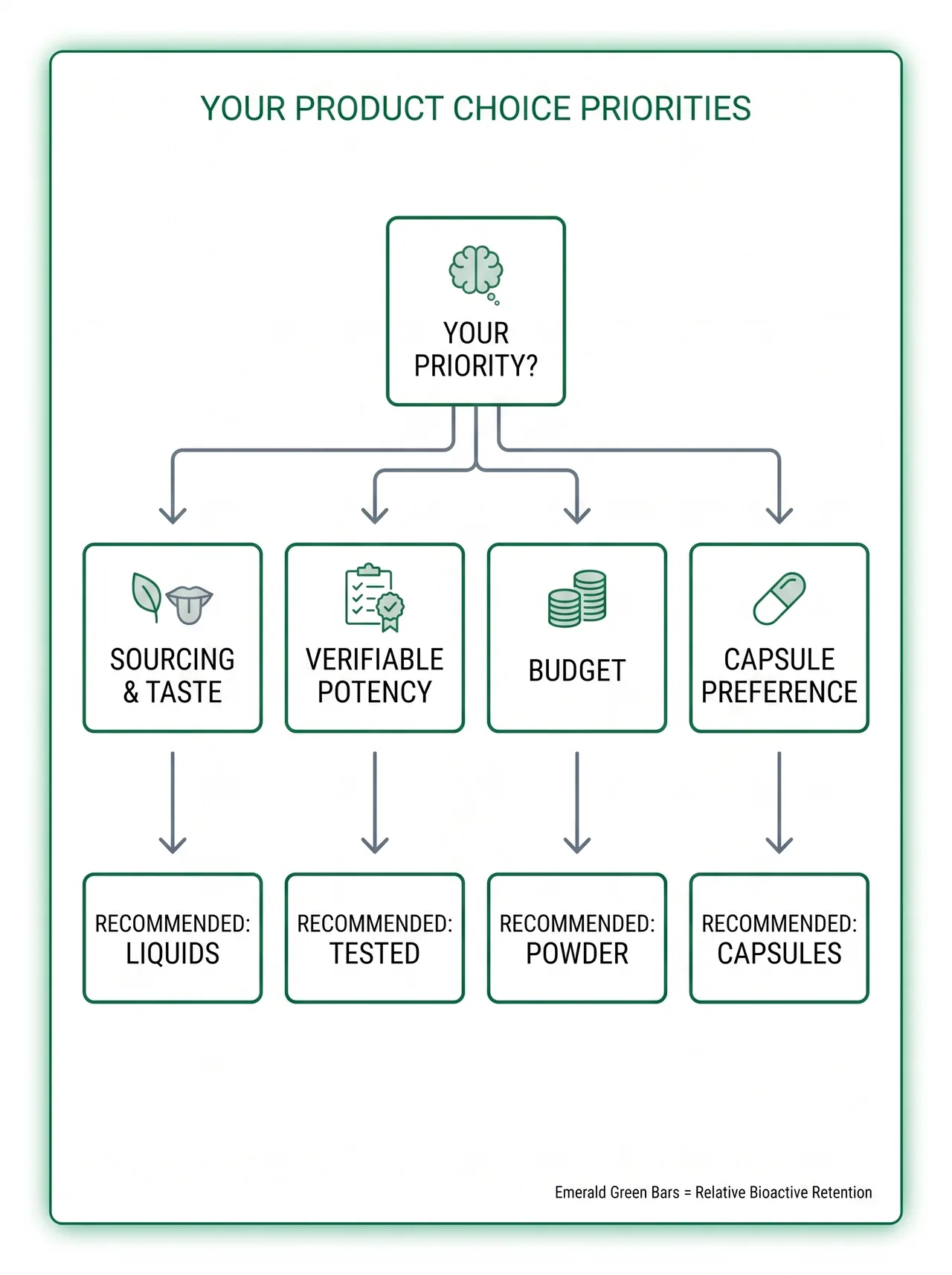
Use this as a quick decision path. If you are an athlete with mild gut or immune goals who genuinely values premium sourcing and a clean taste, ARMRA is a defensible pick. If you want a brand that is at least willing to name its IgG concentration at a comparable price, WONDERCOW states 40 percent in its listing - though none of these brands, ARMRA included, publishes the per-serving grams you would really want. If you are budget-first for general wellness, the community budget pick at around $45 a month makes more sense. If you prefer capsules over powder, a capsule format wins on convenience.
On pregnancy: colostrum is a bovine-derived food product, but it has not been studied specifically for safety in pregnancy. Do not assume it is safe - consult your doctor first.
That same 6:30 AM dry scoop got me real, modest results over eight weeks. It is worth trying. It is not worth blind loyalty at this price when the company will not tell you the one number that would let you check its work.
Vertical decision flowchart for which colostrum to buy based on your priority
A quick decision path: pick the brand that matches your actual priority.

Ready to buy?

We earn a commission if you purchase — it does not affect our verdict.

See current price at ARMRA

Colostrum vs WONDERCOW vs Ancestral Supplements

FeatureARMRAWONDERCOWAncestral Supplements
Price$119.99 / $83.99 sub$64.99 (60 servings)Capsule pricing varies
Per-serving cost~$0.87-$1.67~$1.08 ($0.92 sub)Not stated here
IgG concentration stated>40% marketing (support: >=35%)40% (in listing, not on panel)No
Per-serving IgG (grams)Not disclosedNot disclosedNot disclosed
FormatPowderPowder, gummy, capsuleCapsule
SourcingUS grass-fed, first-milkingGrass-fed family farmGrass-fed
ProcessingCold-chain low-tempNot specified hereNot specified here
Taste (unflavored)Clean, malty, no gritPowder mixableTasteless (capsule)
Best forSourcing + immune goalsVerifiable valueCapsule preferrers

Also tested

We tested these fitness nutrition products in the same period. Here is why they did not make the cut.

WONDERCOW WONDERCOW Colostrum

The closest thing to a transparency benchmark, though it is not the clean winner I first assumed. It states a 40 percent IgG concentration in its listing - more than ARMRA will commit to - at a comparable price of about $1.08 per serving, or $0.92 on subscription. The honest caveat: like ARMRA, it still does not print a per-serving IgG gram figure on its supplement-facts panel, and that 40 percent is marketing copy. The sourcing is grass-fed family farm and the format range (powder, gummy, capsule) is broader. If a brand naming a number at all matters to you, start here.

Ancestral Supplements Ancestral Supplements Colostrum

Best for people who want capsules over powder. The convenience of a pill is the real selling point, and the sourcing is grass-fed. I compared it only on the disclosure axis, since it does not print a per-serving IgG number either, so it carries the same verification gap as ARMRA without ARMRA's processing story.

Honor Supplements Honor Supplements Colostrum

The community-named alternative at about $64.95 for 60 servings (roughly $1.08 a serving, or $0.92 on subscription) - cheaper per jar than ARMRA's $119.99 though similar once you get to cost per serving, and an option no major competitor review covers. It is a reasonable call for budget-first general wellness. Like the others outside WONDERCOW, it does not prominently disclose a per-serving IgG figure, so you are buying on price and sourcing, not verifiable potency.

Frequently asked questions

Is ARMRA colostrum safe during pregnancy?

I would not assume it is. It is a bovine-derived food product, but it has not been studied specifically for safety in pregnancy. Talk to your doctor before taking it while pregnant.

Does ARMRA colostrum break a fast?

Yes, it breaks a fast. It contains protein, calories, and active bioactive compounds, so if you keep a strict fasting window, take it inside your eating window instead.

Is ARMRA colostrum dairy-free?

No. It is made from bovine first-milking colostrum and contains milk allergens. If you are dairy-sensitive, treat it as a real allergy risk; I am aware of a documented full-body rash case.

How much ARMRA colostrum should I take per day?

Follow the label, which is roughly 1 to 2 grams or 1 to 2 scoops a day. I ramped up from a quarter teaspoon over the first week to avoid early gas.

What are the side effects of ARMRA colostrum?

The most common is mild GI upset - gas or cramping - in the first week, which usually fades as you ramp the dose. The more serious risk is an allergic reaction in dairy-sensitive people.

How long until ARMRA colostrum shows results?

Weeks, not days. In my log, bloating eased around weeks 3 to 4 and the immune effect showed around weeks 5 to 6. For responders, 4 to 8 weeks is realistic; some people see nothing at all.

Does ARMRA disclose its IgG content?

No. There is no per-serving IgG figure published anywhere. You only get a marketing concentration above 40 percent, and a support floor of at least 35 percent, which is a ratio with no serving weight to anchor it.

Can ARMRA colostrum help with bloating?

Possibly. I measured a half-inch waist reduction over 8 weeks that I attribute to less bloating, usually starting around weeks 3 to 4. But the gut evidence is mixed, so it is not guaranteed.

Is there a colostrum that is more upfront about its IgG?

Somewhat. WONDERCOW states a 40 percent IgG concentration in its listing, which is more than ARMRA will commit to, at a comparable price - about $1.08 per serving, or $0.92 on subscription. But be clear-eyed: WONDERCOW still does not publish a per-serving IgG figure in grams either, and that 40 percent is a marketing number, not a supplement-facts line. No premium colostrum I checked discloses the per-serving grams.

Does ARMRA colostrum help athletic recovery?

The evidence is modest here. The strongest, best-supported benefit is fewer upper respiratory infections during heavy training, not faster soreness recovery. In my own trial recovery improvement was marginal and hard to separate from sleep and load.
RC

Written by

Ryan Calloway

Competitive natural bodybuilder (WNBF), NASM-CPT. 9 years of competition prep, coaches 12 clients. Every product is purchased at retail, tested across a full training block, and logged against the stated macros before a word is written.

MR

Reviewed by

Marcus Reid

Former product development consultant. Marcus Reid oversees editorial standards and quality review for all TrulyVetted content.