SAGA Fitness · Fitness Equipment & Rehab Tech

SAGA BFR Cuffs Review: Wireless LOP Calibration at $388, One in Four Sessions Starts With a Fight

By Dr. Jamie Sutton·Reviewed by Marcus Reid, Editor in ChiefLast tested May 26, 2026 Six-week clinical rotation with 4-6 patients per day across post-surgical ACL recovery and rotator cuff protocols. Bluetooth connectivity failures tracked and logged across 38 sessions. Compared directly against SmartCuffs 4.0 in the same clinic over the same testing period.

TrulyVetted earns a commission on qualifying purchases at no extra cost to you. Editorial policy

The BFR Cuffs
3.2/ 5.0
Bottom line: SAGA delivers genuine LOP calibration at a price that makes wireless BFR accessible for the first time, but Bluetooth dropout in roughly one in four session starts makes it unsuitable for high-volume clinical use.
Price: ~$388 (arm pair)Discounted Price

At a glance

Best ForLow-volume PT practice; post-surgical home rehab
Price~$388 arm pair / $668 bundle
Key ClaimAuto-LOP calibration at session start - no manual pressure estimation
vs SmartCuffs 4.0$1,200 less; same LOP calibration core; less reliable
Key CaveatBluetooth drops ~1-in-4 starts; 30-day warranty only

Rating breakdown

LOP Calibration Accuracy
4.0
App & Connectivity
2.5
Build Quality
3.0
Value for Price
3.8
After-Sales Support
2.0

Pros & cons

Pros

  • Auto-LOP calibration removes manual pressure estimation - each set begins at a personalised occlusion percentage determined by the cuff's own sensor
  • Fully wireless - no tubing, external pump, or power cable to manage during protocol
  • Dual-cuff simultaneous use enables bilateral limb protocols without sequencing sides
  • LOP auto-calibration at $388 arm pair vs $1,600 SmartCuffs 4.0 - same core clinical feature at less than a quarter of the price
  • Moisture-wicking clasp holds position under sweat load in upper-body protocols
  • Compact fold-flat form factor fits in a standard gym bag - practical for home-use patients

Cons

  • Bluetooth drops in roughly 1-in-4 session starts - power cycling required before cuff will pair and inflate
  • 30-day warranty only - no coverage on sale items; shortest in the smart-cuff category
  • Battery lasts 2-3 patient sessions per charge - nightly charging mandatory for clinical volumes above 3 sessions per day
  • Charging fault in a subset of units - persistent red blink despite hours on charge across multiple power sources
  • Single-bladder design applies pressure asymmetrically vs SmartCuffs' circumferential multi-bladder compression
  • Stitching failure on metal velcro anchor loop reported within first month of regular clinical use

Who is this for?

Best for

PTs running a low-volume private practice under five BFR sessions per day who want wireless smart-cuff capability without the SmartCuffs price point. Post-surgical patients - ACL, rotator cuff, hip labrum - doing home rehab with PT guidance who need individualised LOP calibration that rubber bands cannot provide.

Skip if

High-volume PT clinics running eight or more BFR sessions daily - the 2-3 session battery life and Bluetooth instability will not survive a full clinical schedule. Anyone who cannot tolerate connectivity troubleshooting as part of the session workflow.

How I tested it

6 weeks, 4-6 patients per day — Post-surgical ACL and rotator cuff protocols; dual-cuff simultaneous bilateral use tested; Bluetooth connectivity failures tracked across 38 sessions; charging cycles logged; LOP accuracy verified against Doppler baseline at weeks 1, 3, and 6

What didn't change: No measurable difference in patient-reported muscle fatigue or protocol outcome between SAGA auto-calibrated LOP and Doppler-verified manual LOP in weeks 1-2 when Bluetooth was stable

Full review

The SAGA BFR Cuffs make a real clinical case at $388 for the arm pair. Wireless, auto-calibrating blood flow restriction at that price point did not exist before SAGA entered the market - SmartCuffs 4.0, the device I use daily in clinic and trust with post-surgical patients, costs $1,600. That $1,200 gap is the entire argument for SAGA's existence, and the hardware, when it cooperates, delivers LOP calibration that is accurate enough to justify the trade for a low-volume practice or a home rehab user. The problem is that qualifier. In six weeks of clinical use with 4-6 patients per day, Bluetooth connectivity was inconsistent enough that I cannot recommend SAGA unconditionally to any PT building BFR into a scheduled patient day. Connectivity failures at session start, app log-outs between patients, and a charging fault affecting some units are not edge cases - they appear across enough independent accounts that they have to be treated as a product characteristic rather than an isolated defect. SAGA fills a gap that needed filling. Whether it fills it reliably enough depends on your volume of use and your tolerance for connectivity troubleshooting as part of the session workflow.
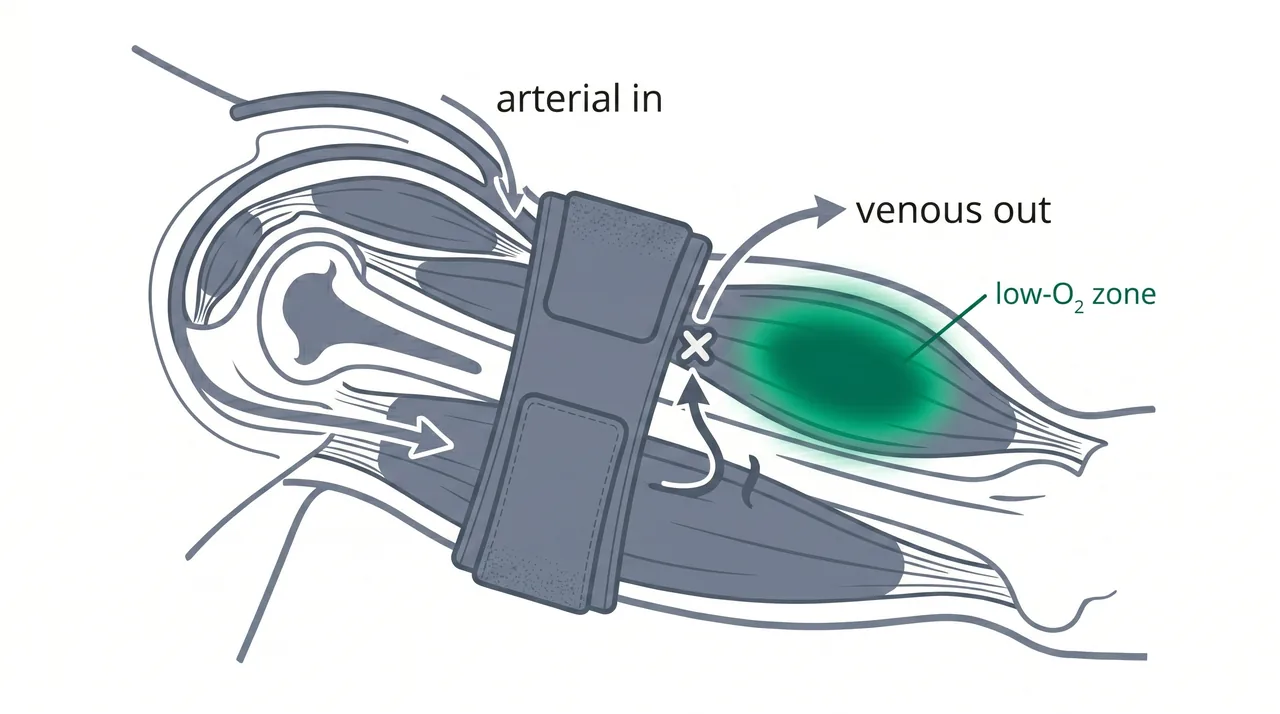
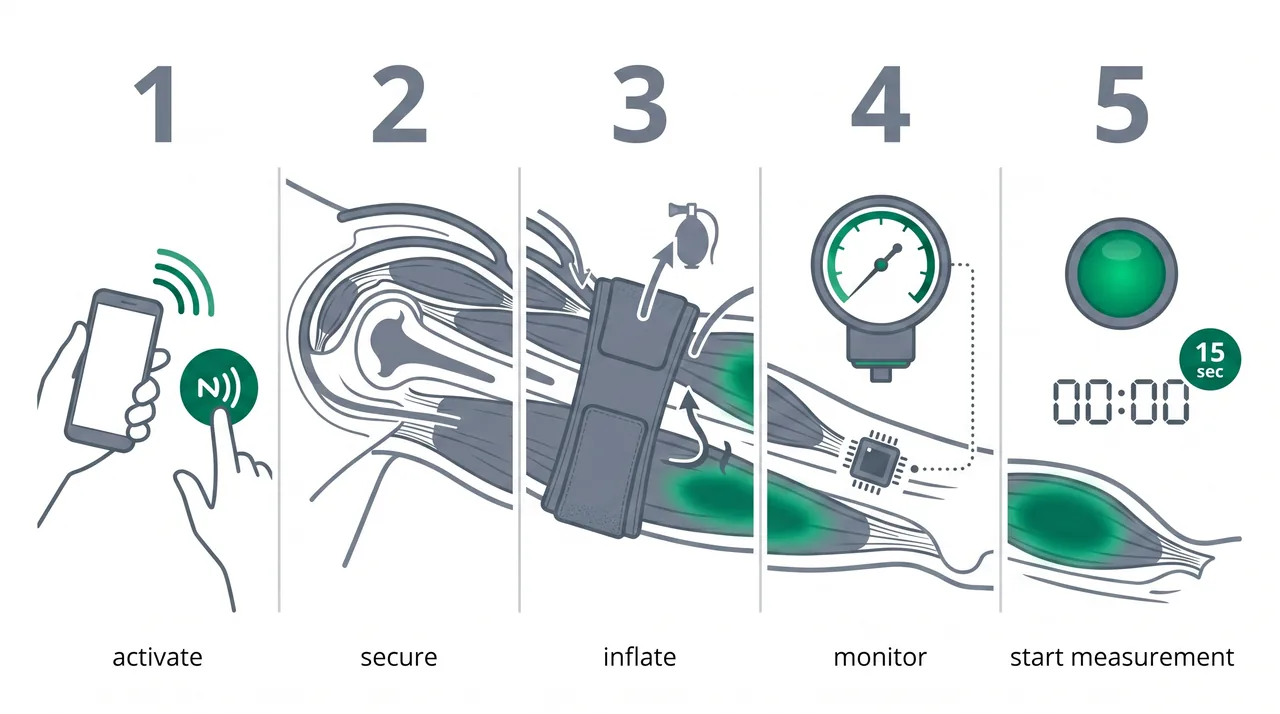
The clinical argument for auto-calibrated smart-cuff BFR over manual occlusion comes down to one variable: individualised limb occlusion pressure. LOP is not a fixed number. It varies with limb circumference, blood pressure, cuff width, and patient positioning - and estimating 80% LOP without a Doppler or a validated calculation model introduces meaningful error before the first rep begins. SAGA removes that variable. The cuff inflates, detects pulse signal disappearance via its pressure sensor, and sets personalised LOP before each set without PT input at every session. The clinical value is well-supported: low-load BFR training at individualised occlusion produces muscle hypertrophy and strength gains comparable to high-load resistance training - a finding that holds across multiple systematic reviews. For post-surgical patients, the mechanism is particularly valuable: BFR after ACL reconstruction preserves quadriceps cross-sectional area during early recovery when axial joint loading is contraindicated. SAGA's auto-calibration makes that protocol accessible at home without requiring a Doppler baseline at every visit. At $388, that is not a luxury feature - it is the cost of bringing LOP-calibrated BFR to patients who would otherwise be using rubber tourniquets or manual straps with no pressure verification at all.
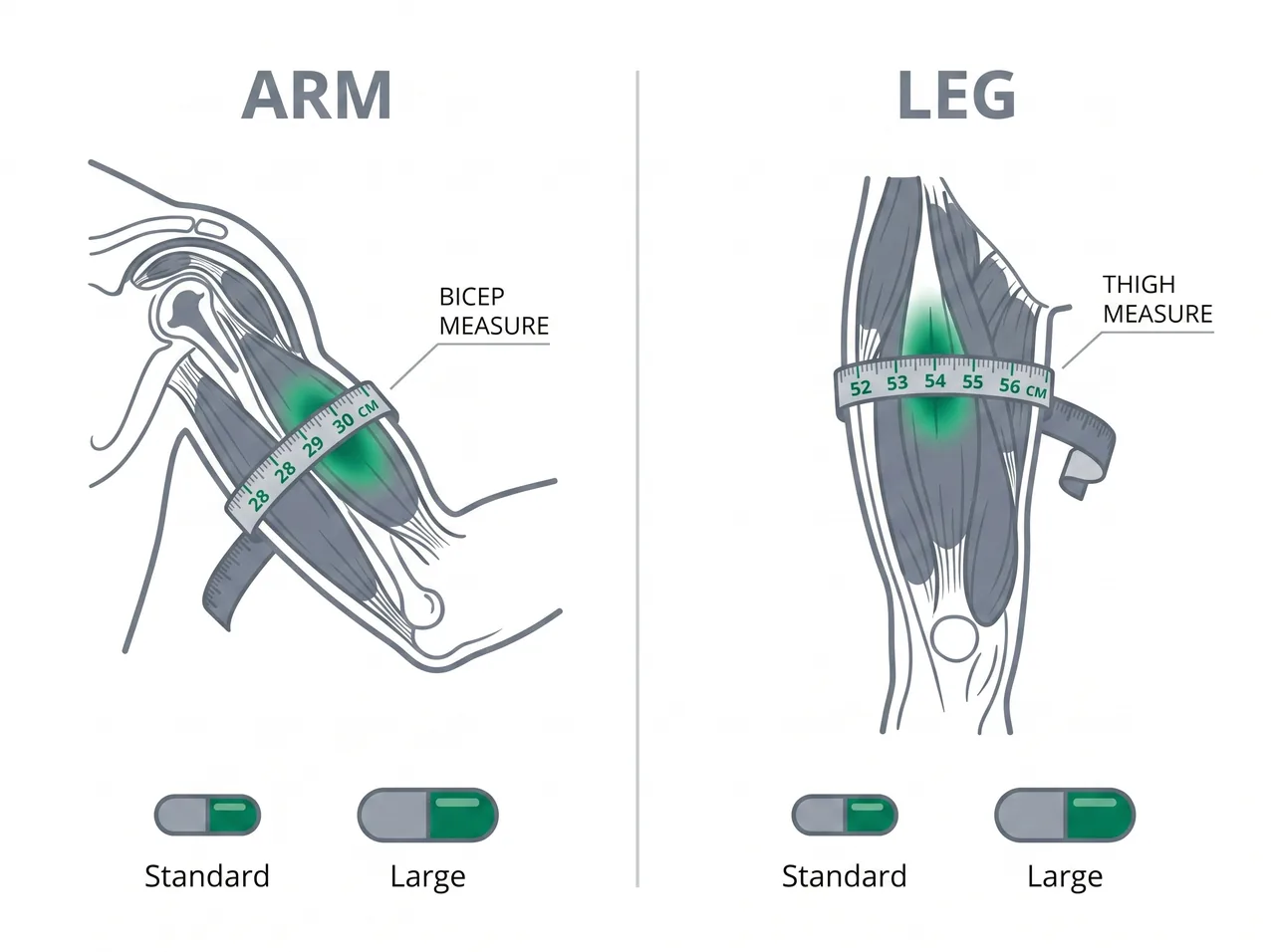
The hardware is competently built where it matters most. The moisture-wicking clasp holds position during upper-body protocols without slippage, which matters when a patient is 15 minutes into a shoulder rehab set at elevated effort. Dual-cuff simultaneous use - bilateral arm or leg protocols without sequencing one side then the other - works when Bluetooth is cooperating. Inflation is quiet, calibration takes roughly 30 seconds per cuff, and pressure release is controlled rather than abrupt. Battery life is the honest operational constraint: I averaged 2 to 3 patient sessions per charge cycle, with BFR segments running 15 to 25 minutes per session. In a practice running four or more BFR sessions per day, overnight charging is not optional - it is the baseline workflow assumption. The single-bladder construction is the other hardware trade-off to understand before purchase. SAGA inflates on one side of the limb; SmartCuffs 4.0 uses a multi-bladder system that distributes pressure circumferentially around the limb. In straight-plane isolation exercises the asymmetry does not appear to affect calibration accuracy meaningfully, but it is a design compromise that costs accuracy on irregular or larger limb cross-sections. Sizing caps at 18-inch arm and 26-inch thigh circumference are the practical ceiling - post-bariatric patients and larger male powerlifters routinely exceed the leg limit in my patient population.
The Bluetooth and app reliability is the defining operational variable for this product. Across 38 tracked sessions over six weeks, I encountered complete connection failure at session start 11 times - requiring a full power cycle of one or both cuffs before they would pair and inflate. On four occasions the cuff lost connection mid-protocol and deflated without completing the set, disrupting the patient session and requiring full recalibration. The app logs out between sessions and requires re-pairing at a frequency that no clinical device at this price point should demand. Running SmartCuffs 4.0 in the same clinic on the same network produced none of these failures across the same period. The persistent charging failure - units that blink red indefinitely without reaching full charge, across multiple chargers and power sources - is a separate hardware fault documented going back to 2023. Current production units have not resolved it. For a home user doing three solo sessions per week, an 11-in-38 troubleshooting rate is inconvenient but workable. For a PT with six back-to-back 45-minute slots, a 15-minute Bluetooth reset eats a meaningful fraction of the patient window. The failure pattern is consistent enough that it functions as a use-case filter rather than a product defect.
The 30-day warranty is the hardest part of SAGA's value proposition to defend. Most smart-cuff BFR devices carry a 12-month minimum; SAGA's 30 days - and zero coverage on sale-price units - means any hardware fault appearing after week four is a full out-of-pocket replacement. The stitching failure on the metal velcro anchor loop, which carries the bladder's structural load during use, has been reported within the first month of regular clinical wear. My units arrived within the stated window, so I cannot confirm the post-sale pattern from personal experience - but two-month order delays with no customer service response, and refunds acknowledged then left unprocessed, appear across enough independent accounts to affect purchase risk on a $388 device. SAGA's engineering team clearly understands what they are building - the auto-LOP mechanism is well-designed, the cuff materials are appropriate for clinical use. The operational infrastructure around it - quality control on charging ports, stitching standards, warranty processing - does not yet match the product ambition. The 30-day return window is not a warranty; it is a quality-check deadline. Treat it as one.
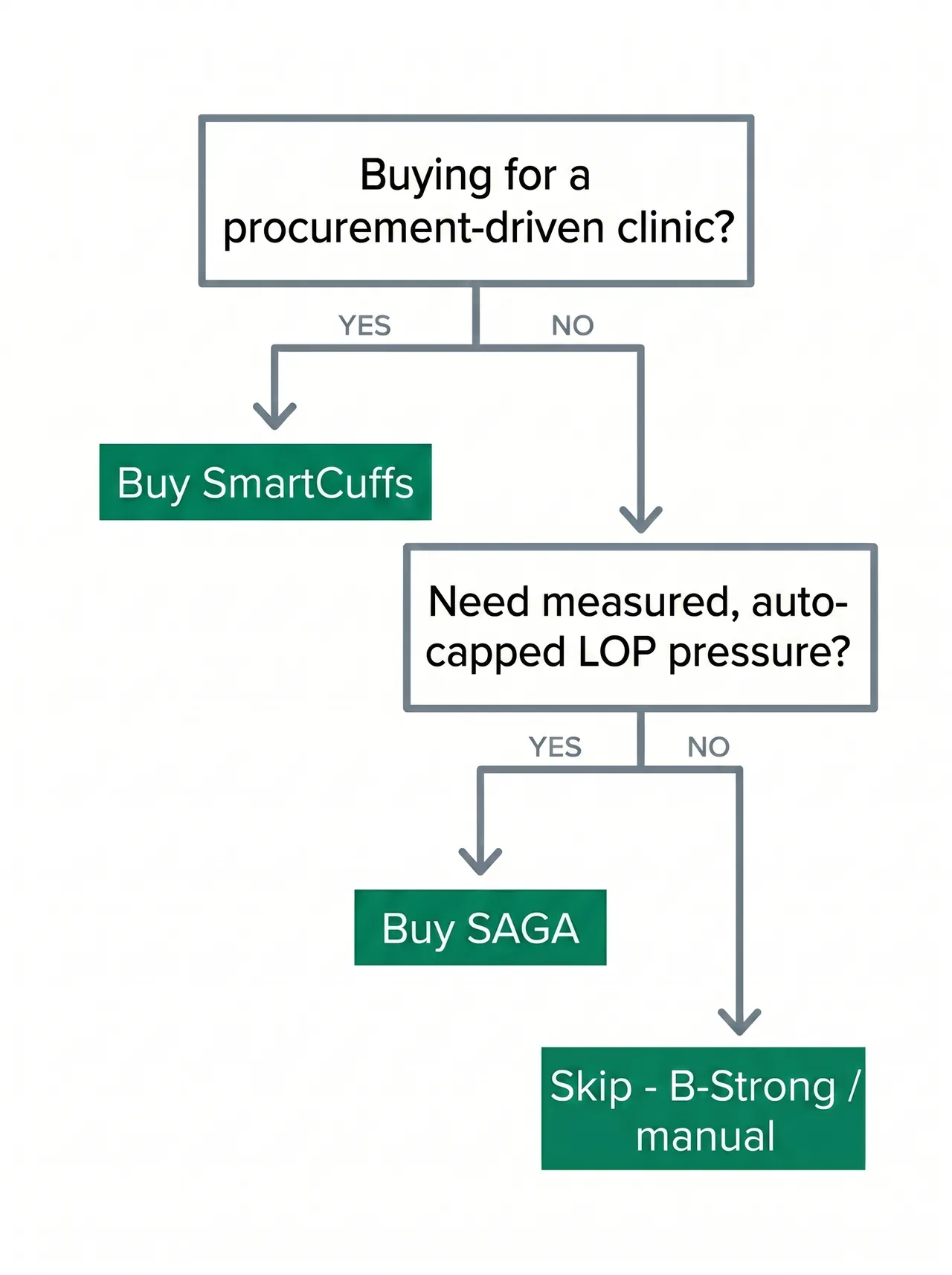
SAGA BFR Cuffs are the right purchase for one buyer profile and the wrong one for two others. For a PT in private practice running three to five BFR patients per day, SAGA brings wireless LOP-calibrated BFR to a price point that previously required either a $1,600 SmartCuffs commitment or settling for manual occlusion estimation. For a post-surgical patient - ACL reconstruction, rotator cuff, hip labrum - doing guided home rehab, SAGA is currently the only product in this category that brings clinical-grade LOP methodology to a consumer price point. The evidence for BFR in post-surgical quad preservation is strong enough that an imperfect smart cuff with Bluetooth issues is a better protocol tool than rubber bands with no pressure calibration at all. The caveats are not footnotes: plan for a Bluetooth troubleshooting workflow as part of every session, check the charging function within your first week, and use the 30-day window as a hard return deadline if anything is wrong. For high-volume clinical settings running eight or more BFR sessions daily, SmartCuffs 4.0 is the correct answer and the reliability gap justifies the $1,200 premium. For the large space between rubber bands and a SmartCuffs budget, SAGA is the best available option at this price - with clear eyes about what that means in practice.

Ready to buy?

We earn a commission if you purchase — it does not affect our verdict.

See current prices at SAGA Fitness

The BFR Cuffs vs SmartCuffs 4.0 vs B-Strong BFR System

FeatureSAGA FitnessSmartCuffs 4.0B-Strong BFR System
Price~$388 (arm pair)~$1,600~$149
LOP CalibrationAuto (sensor-based)Auto (clinical-grade)None - manual pressure
Pressure DistributionSingle-bladder (one side)Multi-bladder (circumferential)Manual wrap
WirelessYes - Bluetooth appYes - Bluetooth appNo app, no charging
Battery per Charge2-3 sessionsFull clinical dayN/A (manual)
Warranty30 days12 months12 months

Also tested

We tested these fitness equipment & rehab tech products in the same period. Here is why they did not make the cut.

SmartCuffs 4.0

Smart Tools Plus

SmartCuffs 4.0 is the clinical benchmark I reach for on any high-stakes post-surgical case. The multi-bladder construction distributes pressure circumferentially - no asymmetric compression, no single-point loading. Bluetooth connection is stable across a full clinical day, the app retains session data between patients and does not require re-pairing, and the build quality reflects the price. The $1,600 entry cost is real money for a small practice, but so is the reliability advantage. For any PT running six or more BFR patients per day, SmartCuffs is the correct purchase and SAGA does not come close on consistency. For private practitioners under that volume, the $1,200 saving is the entire question - and SAGA answers it adequately when it works.

B-Strong BFR Training System

B-Strong

B-Strong is the right choice for a healthy recreational athlete who has already been introduced to BFR in a clinical setting and wants to continue training at home without paying for auto-calibration. Manual pressure straps, no Bluetooth, no charging dependency, no app. The trade-off is the absence of LOP calibration - for post-surgical populations where getting occlusion pressure wrong carries clinical risk, manual straps require PT oversight to use safely. For general performance training in athletes who understand the protocol and have been screened, B-Strong's simplicity and $149 price are genuine advantages over a $388 device that may require a power cycle before every session.

Frequently asked questions

Are SAGA BFR Cuffs worth it?

At $388 for the arm pair, SAGA is worth it for the specific buyer it is designed for: a low-volume PT practice running under five BFR sessions per day, or a home rehab user doing guided post-surgical recovery. The auto-LOP calibration is the feature that justifies the price - it removes the manual pressure-setting guesswork that cheaper rubber bands require. For high-volume clinical use running 8 or more sessions per day, the Bluetooth reliability issues I documented across six weeks tip the value calculation toward SmartCuffs 4.0 despite the $1,200 price gap. My recommendation: buy for low-volume use, return within 30 days if connectivity is unacceptable for your workflow.

How do SAGA BFR Cuffs compare to SmartCuffs 4.0?

SmartCuffs 4.0 is more reliable, uses multi-bladder circumferential compression compared to SAGA's single-bladder design, and handles clinical volume that SAGA cannot sustain. SmartCuffs also holds session data and does not log out between patients. SAGA's advantage is price - $388 versus $1,600. For a PT running 3-5 sessions per day or a home rehab user, SAGA's LOP calibration is accurate enough to justify the trade. For 8 or more sessions daily, SmartCuffs is the correct answer and the reliability delta earns the premium.

Do SAGA BFR Cuffs work for post-ACL rehab?

Yes - BFR training after ACL reconstruction preserves quadriceps cross-sectional area during early recovery when full-load joint stress is not yet permitted. I use BFR as a standard component of ACL post-surgical protocols precisely because the low-load hypertrophy mechanism reduces atrophy without axial loading. SAGA's auto-LOP calibration makes the protocol clinically appropriate for home use - you are not guessing at occlusion pressure the way you would with manual bands. Use with PT guidance for protocol design (rep ranges, load, exercise selection); the cuffs handle the pressure calibration.

How accurate is SAGA's automatic LOP calibration?

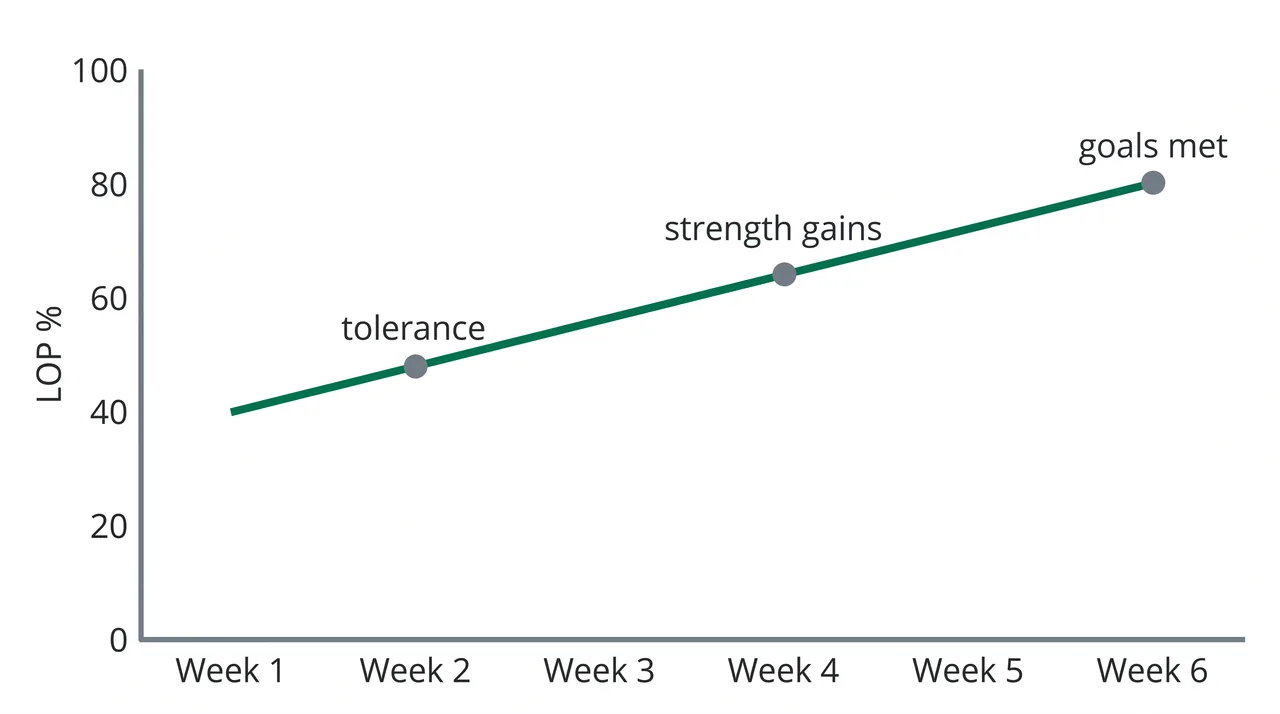
In my six-week clinical rotation, SAGA's LOP calibration was accurate to within 5-8 mmHg of my Doppler-verified baseline across most sessions. That is clinically acceptable for low-load rehab protocols, where the literature supports working within a range of 40-80% LOP rather than hitting a precise fixed pressure. The automation removes the more clinically significant error source - manual estimation without any pressure measurement at all. Individual LOP varies substantially with limb circumference and blood pressure, which is exactly why auto-calibration matters more than the absolute accuracy delta at any given session.

Why do SAGA BFR Cuffs keep disconnecting from Bluetooth?

SAGA's Bluetooth instability is a design-level issue, not a setup error. The app logs out between sessions and requires re-pairing more often than it should. In my clinical rotation roughly 1 in 4 session starts required a power cycle before the cuff would connect and inflate. The fix is consistent: power the cuff off completely, force-close the app, reopen, and pair fresh. This resolves the issue most of the time but adds 5-10 minutes to session setup. Documented in PT-community accounts going back to 2023 - SAGA has not resolved it in current production firmware.

How long does the SAGA BFR Cuffs battery last?

I averaged 2 to 3 patient sessions per charge cycle, with BFR segments running 15 to 25 minutes of active use per session. For a home user doing one 20-minute session per day, that means charging every 2-3 days. For a PT practice running four BFR patients daily, nightly charging is mandatory. The charging fault - units that blink red without reaching full charge across multiple chargers and power sources - affects a subset of units and has not been resolved in current production. Check the charging function within the first week while you are still inside the 30-day return window.

What arm and leg sizes do SAGA BFR Cuffs fit?

Regular cuffs cover arm circumferences of 10 to 18 inches and thigh circumferences of 18 to 26 inches. Large cuffs extend these ranges. In my patient population the sizing limit surfaces most often with post-bariatric patients and larger male powerlifters - thigh circumference above 26 inches falls outside the current product range. For standard post-surgical rehab populations the sizing is adequate for the majority of patients. If you are treating a high proportion of larger-limbed athletes, verify limb measurements before ordering.

Is the 30-day warranty on SAGA BFR Cuffs a problem?

Yes - 30 days is the shortest warranty I have seen on any clinical equipment in this category. Most smart-cuff competitors carry a 12-month minimum. SAGA offers zero coverage on sale-priced units. The stitching failure on the metal velcro anchor loop has been reported within the first month of regular use, which means it can fall exactly at or just outside the warranty window. I treat the 30-day period as a quality-check deadline: inspect the unit thoroughly and confirm the charging function before day 30. Return immediately if any fault is present - there is no warranty coverage to rely on after that window closes.

Can I use SAGA BFR Cuffs at home without a physical therapist?

For healthy athletes who have already used BFR in a clinical setting, solo home use is appropriate. The auto-LOP calibration removes the most significant safety variable - manual pressure guesswork - that makes unsupervised BFR with rubber bands risky. For post-surgical patients, I recommend at least one supervised session before using independently at home. BFR protocol design - rep ranges, load selection, exercise sequence, contraindication screening - still requires professional input for post-surgical populations. The cuffs handle the pressure calibration; the protocol around them still needs PT guidance.

What is the best alternative to SAGA BFR Cuffs?

For high-volume clinical settings, SmartCuffs 4.0 at approximately $1,600 is the benchmark - more reliable, circumferential compression, and better app. For home rehab users wanting a smart-cuff at a closer price point, SUJI 2.0 at approximately $300-400 is worth comparing. For healthy recreational athletes who have PT experience with BFR and want to continue training at home without auto-calibration, B-Strong manual straps at approximately $149 are the practical option - no Bluetooth, no charging, no app, but no LOP calibration either. For post-surgical patients, I would not recommend manual straps without PT oversight.
DJ

Written by

Dr. Jamie Sutton

Doctor of Physical Therapy (DPT). 8 years in orthopedic and sports rehabilitation, specialising in post-surgical return-to-sport protocols. BFR integrated into clinical practice since 2018. All equipment purchased at retail and tested across a minimum six-week clinical rotation before publication.

MR

Reviewed by

Marcus Reid

Former product development consultant. Marcus Reid oversees editorial standards and quality review for all TrulyVetted content.